It's not nearly as discrete (and I realise NVidia marketing particularly distorted reality on this).
Compute execution units are shared (there's no separate pools for compute/shading and AI, or RT for that matter), and while you have specific accelerator ASICs for parts of RT pipeline - all that does is remove bottlenecks 'outside' of compute - and compute still happens in all workloads.
And as mentioned by the other poster - raster fixed function elements also play into this - your RT still has to sample textures etc. (so 'raster' operations) to synthesize the picture, and perform de-noising which is either a shader or an AI/compute workload, further making it all depend on each other.
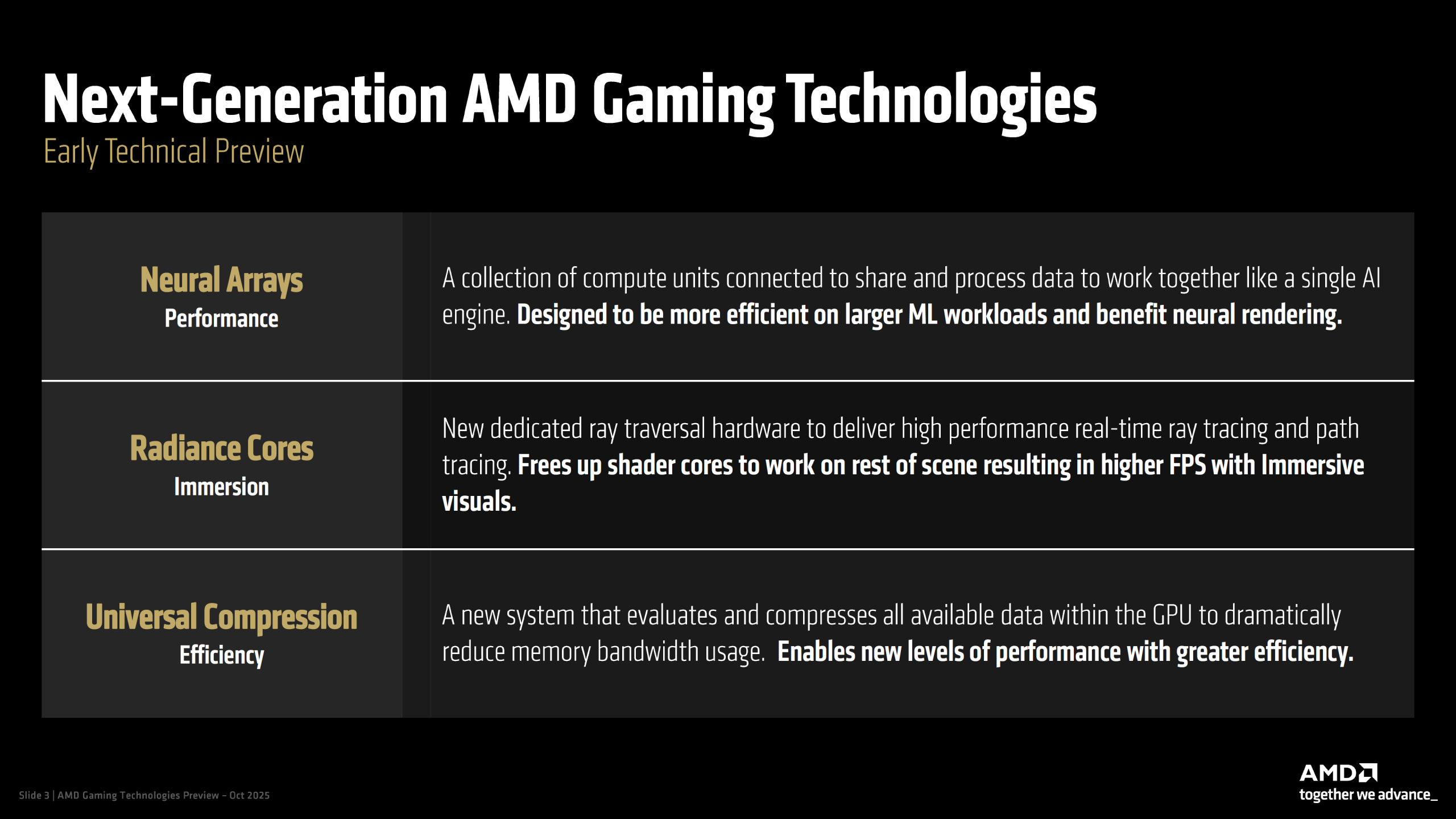
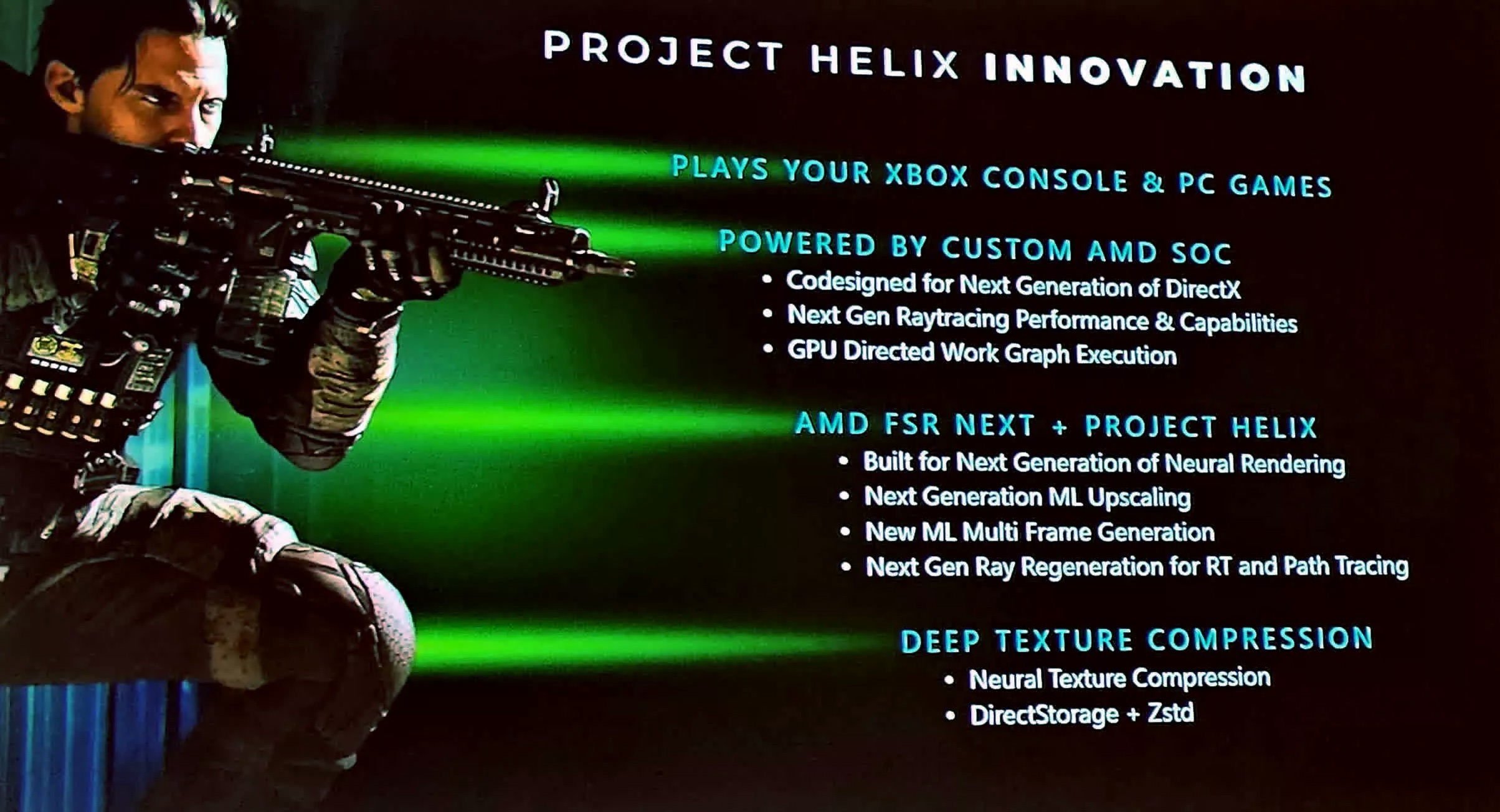
I shared these photos before but I always thought this is how the PS6 reaches 5090 performance, not with brute force but with AI through a new Neural Rendering Pipeline.
Neural Rendering Pipeline
Render Essentials (geometry + partial lighting)
- Internal Resolution: 720p–1440p
- Base FPS (raw render): 30–60 FPS
↓
Radiance Cores generate key data
- Sparse ray tracing / path tracing samples
- Partial global illumination
↓
Neural Arrays reconstruct:
- Lighting (full global illumination from partial rays)
- Denoising (remove noise and stabilize lighting)
- Resolution (AI upscaling → 4K–8K output)
- Detail (texture + edge + surface enhancement)
- Motion (AI frame generation)
↓
Frame Generation Stage
- Inserts 1–3 AI-generated frames per real frame
- Effective FPS: 60 → 120 → 240 FPS
↓
Final Image (AI-completed)
- Output Resolution: 4K–8K (reconstructed)
- Perceived Performance: High FPS + high visual fidelity
Mark Cerny gave us some hints on this as well in his PS5 Pro technical seminar.
"Another source of future growth will come from more sophisticated neural networks. When fewer, higher quality pixels are combined with the right neural network, the result is richer graphics.
One way to look at this is supportable upscaling ratio. If we're able to create quality imagery with a 2:1 upscale and can then improve the neural network and reach the same image quality with a 3:1 upscale, then the effective power of the GPU has roughly doubled. And that stacks on top of whatever is being done to speed up rasterized rendering or ray tracing.
There's enormous potential here. We also hope to be heading towards multiple uses of these CNNs within a frame, not just super resolution, but also some of the other targets I was talking about, such as the denoising that's needed when doing optimized ray tracing."