• Hey Guest. Check out your NeoGAF Wrapped 2025 results here!

Nintendo bleeds $14 billion market cap over worries about DRAM shortages and price increases (12GB of RAM modules for Switch 2 have gone up by 41%)

Samsung, SK Hynix and Micron, the only three major DRAM producers are being paid so much by AI companies that they have essentially stopped producing consumer level RAM and are only producing RAM for AI data centers (HBM, High Bandwidth Memory).
Everything from cars, phones, consoles, computers and other such products will all eventually start having supply problems and the prices will inevitably sky rocket.
And it wouldn't be the first time that Samsung et al. just had an agreement with each other to not produce more in order to keep the supply short and the prices high...
 
It's not how it's work
Nintendo profit 3bn on 86bn market cap means 3.5% ROE
So if profit due to chip shortages drop by 400mn - it'll be 2.6bn profit
To maintain same ROE, market cap should drop to 74bn.
Article is shit though, it was not 14bn as Nin market cap is not 280bn

There are multiplicators between profit and share price, it's why market cap moves are order of magnitude greater than profit moves
That's not how it works either.

There is no hard science or well established correlation between a companies profit and its share price.

Share price is the product of aggregate market speculative positioning driven by of all sorts of factors; from the companies latest revenue figures, to forward revenue projections, to held company assets, to held liabilities, to aggregate costs, to macro-factor discounting, to market-factor discounting, to competitive market-pressure discounting, the list goes on...

Also, no part of the movement of a company's share price in any way affects their profits or bottom line. The only people exposed to the companies share price movements are the investors and by extension the C-suite (who will be carrying shares and/or share award incentives to grow the business).

The only exception to this is when the company carries liabilities that are secured against it's own shares (which sometimes companies with strong share value do to raise debt capital to finance growth or ops). In this case, if the share value drops then the company will be expected to either (depending on the covenants of the debt contract) pay higher interest (hurting their bottom line) or provide more collateral, either in cash, shares or other assets accepted by the lender.
 
What I said wasn't complicated. Consoles haven't been affected so far I said.

I didn't say they wouldn't be affected I said "yet" with an "if ever" and an explanation for specific "next gen" hardware. Yes, the 2 consoles I mentioned are less affected than smartphones are. Some Smartphone manufacturers have begun raising prices. They don't make price sensitive loss leading products either with income based on software sales. Smartphone manufacturer margins and revenue would collapse if they don't sell enough high margin hardware, console manufacturers can delay install base growth while keeping software profit on old gen and "next gen" prices low just like they did during chip shortages (scalpers not withstanding). Whether they do this or not though I said is unknown.

Nintendo doesn't sell hardware at loss and same goes for "new" (post PS3) Sony. Sony has stock of manufactured PS5s (and probably some parts) so they can amorize the impact for the next few months (Nintendo could be similar). Compared to some smartphone manufacturers (Apple, Samsung) console makers are small fries.

I think Nintendo will likely go first around April-June 2026 and Sony around August 2026.

Yep, I expect no price increase in Q1 2026 but after that everything is possible.
 
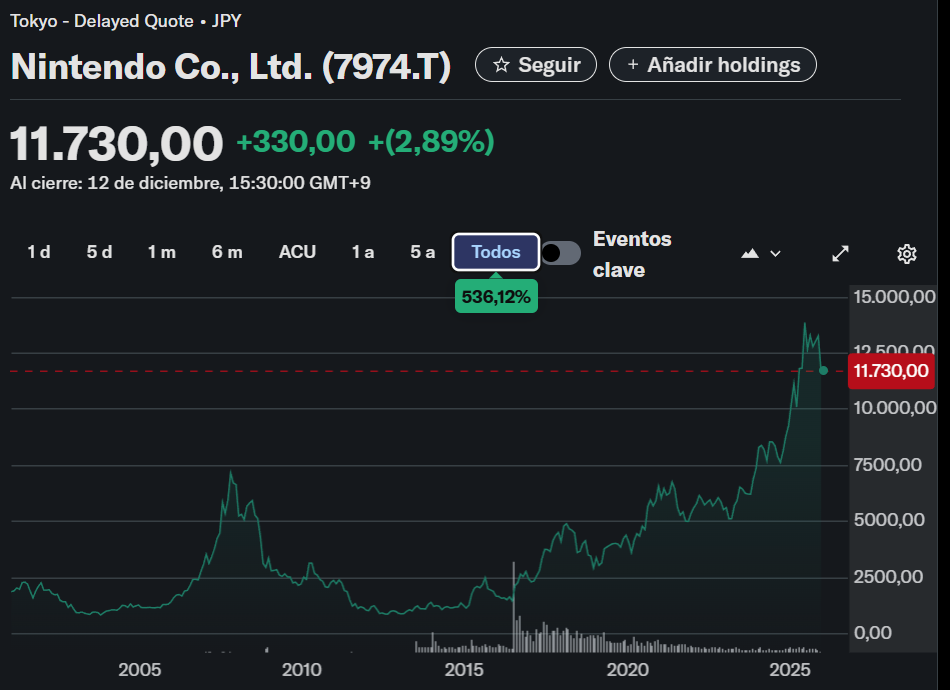
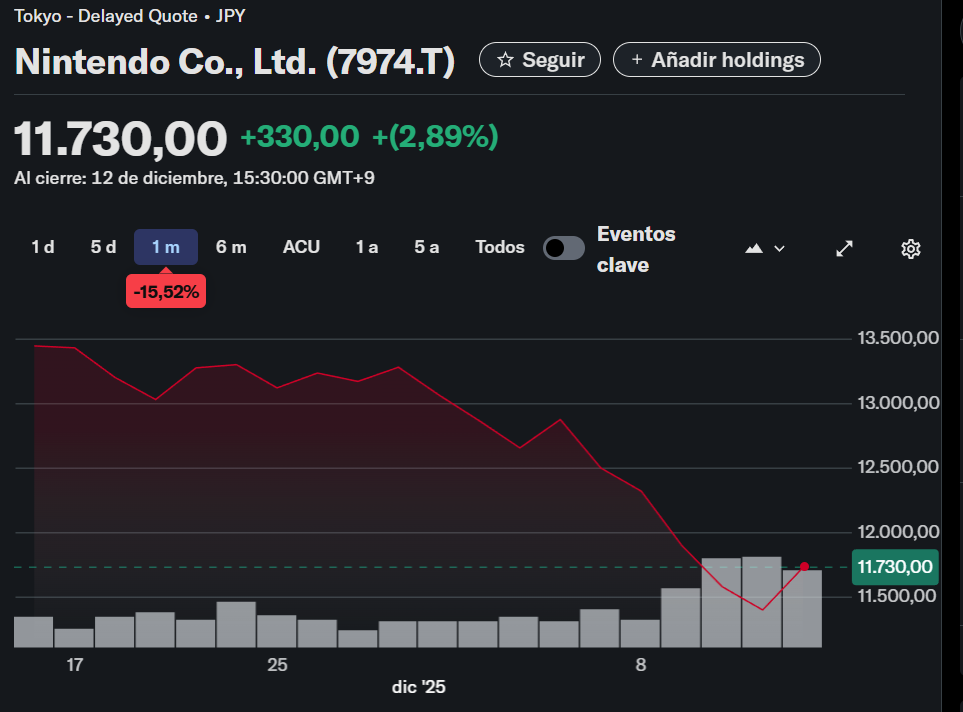
Seems they had their all time peak in August and lost around 16% in the last month:
image.png


image.png
 
Nintendo doesn't sell hardware at loss and same goes for "new" (post PS3) Sony. Sony has stock of manufactured PS5s (and probably some parts) so they can amorize the impact for the next few months (Nintendo could be similar). Compared to some smartphone manufacturers (Apple, Samsung) console makers are small fries.
Sony was selling both PS4 and PS5 at a loss. Nintendo sold at a loss up until Switch 1. Switch 2 they are selling at a small profit (near break even) in the hope of selling software. Phone manufacturers don't do this clearly because it's a third party (google) making that profit. Samsung make RAM so they can price the phone as they please. Yes consoles are small fry vs Apple and Samsung but that's not really relevant to what was said. I didnt say they're big fry vs smartphones. I just said consoles haven't been affected yet and sony is even discounting its consoles vs PC components which have gone up already.
 
Last edited:
Sony was selling both PS4 and PS5 at a loss. Nintendo sold at a loss up until Switch 1. Switch 2 they are selling at a small profit (near break even) in the hope of selling software. Phone manufacturers don't do this clearly because it's a third party (google) making that profit. Samsung make RAM so they can price the phone as they please. Yes consoles are small fry vs Apple and Samsung but that's not really relevance to what was said. I didnt say they're big fry vs smartphones. I just said consoles haven't been affected yet and sony is even discounting its consoles vs PC components which have gone up already.


So not even fucking Samsung gets the privelage to buy from Samsung....

Console producers make much less units than PC parts makers, smartphone makers etc. They are fina for next few months because they still have stock bought when prices where normal. At some point it will affect them. And I doubt they will get good deals with memory makers when they buy in millions and not billions of units...
 
That's not how it works either.
For simplicity it is
All other factors remains pretty much the same and they imply what investors see a "fair" p/e for company. And largest shareholders (all those funds and trusts) look at p/e (ROE) for their judgement of investments.
 
This whole RAM shortage is so nefarious that it can only be described as deliberate. If it continues, it's gonna choke out the hardware computing market completely forcing the world to connect to the cloud permanently.
 

So not even fucking Samsung gets the privelage to buy from Samsung....

Console producers make much less units than PC parts makers, smartphone makers etc. They are fina for next few months because they still have stock bought when prices where normal. At some point it will affect them. And I doubt they will get good deals with memory makers when they buy in millions and not billions of units...
Yeah Samsung will choose profit and can get a smartphone supply if it is more profitable than selling to AI companies. They can set price to whatever they like.

That article is a little hyperbolic though purely because the thought of Samsung rejecting samsung is a funny headline but really what samsung is doing is not giving Samsung MX a years supply but 3 month supply to maximise wherever they make the most profit on at the time. It's the volatility of the market and not so much Samsung having to pay more for Samsung stuff. What they are doing is normal. Same with nvidia doing paper GPU launches and supplying AI vendors instead.
 
Last edited:
So Sony don't use RAM and SSD memory in their consoles? Smart guys!
It'll affect everything, but Nintendo in particular is in a lot more heat since they're also reliant on memory for their software titles.

More than 80% of Nintendo's software revenue consists of first party software sales and on top of that the digital vs. physical split is still >60% for their packaged software. So assuming Nintendo still plan to offer all of their first party software on-cart, any increase in prices for NAND memory will mean a very direct hit on their profit margins. Which is something neither Sony nor MS will have to consider.
 
This whole RAM shortage is so nefarious that it can only be described as deliberate. If it continues, it's gonna choke out the hardware computing market completely forcing the world to connect to the cloud permanently.
At the very least, all the CEOs who are pushing for an all-digital streaming service future are drinking champagne right now.
 
1XpFxehUeTqbScD2.jpg

Nintendo is confronting a significant jump in memory costs that is already affecting its hardware business. This quarter the company faces roughly a 41% increase for the 12 GB LPDDR5X modules used in the Switch 2, while 256 GB of NAND flash has risen by about 8%. Those increases raise the bill of materials for every product that depends on these components and have coincided with a pullback in the company's share price to levels not seen since May. The increased spending on components comes at a time when the new console must demonstrate its long-term commercial viability. Nintendo needs to keep investing in an ecosystem that is becoming increasingly costly to sustain.

A larger portion of the per-unit cost being linked to more expensive DRAM is forcing tighter internal storage management and increasing reliance on external media, which are also trading at high prices. This raises the overall cost of ownership for gamers who purchase large third-party titles or need extra storage capacity. Since the Switch 2's profit margins were not particularly wide to begin with, absorbing a 41% increase in DRAM costs and an 8% rise in NAND costs will significantly reduce Nintendo's ability to fund promotions, subsidize bundles, or invest in additional marketing without impacting profitability. A price increase might also be necessary, as Nintendo cannot absorb all these costs.

via Tech PowerUp
 
Well it looks like Japan market will be the one to carry again Switch 2 sales if it will be expensive in other regions.
No price increase from Nintendo yet over this that I'm aware of. It also could be marginal. We don't know how much Nintendo is paying for their hardware. 41% increase in a dollar is an extra 41 cents. Nintendo pays much less than we do and ram is only part of the box.
 
Last edited:
No price increase from Nintendo yet over this that I'm aware of. It also could be marginal. We don't know how much Nintendo is paying for their hardware. 41% increase in a dollar is an extra 41 cents. Nintendo pays much less than we do and ram is only part of the box.

YlAjSc2L2ZHVQ6Rw.jpg


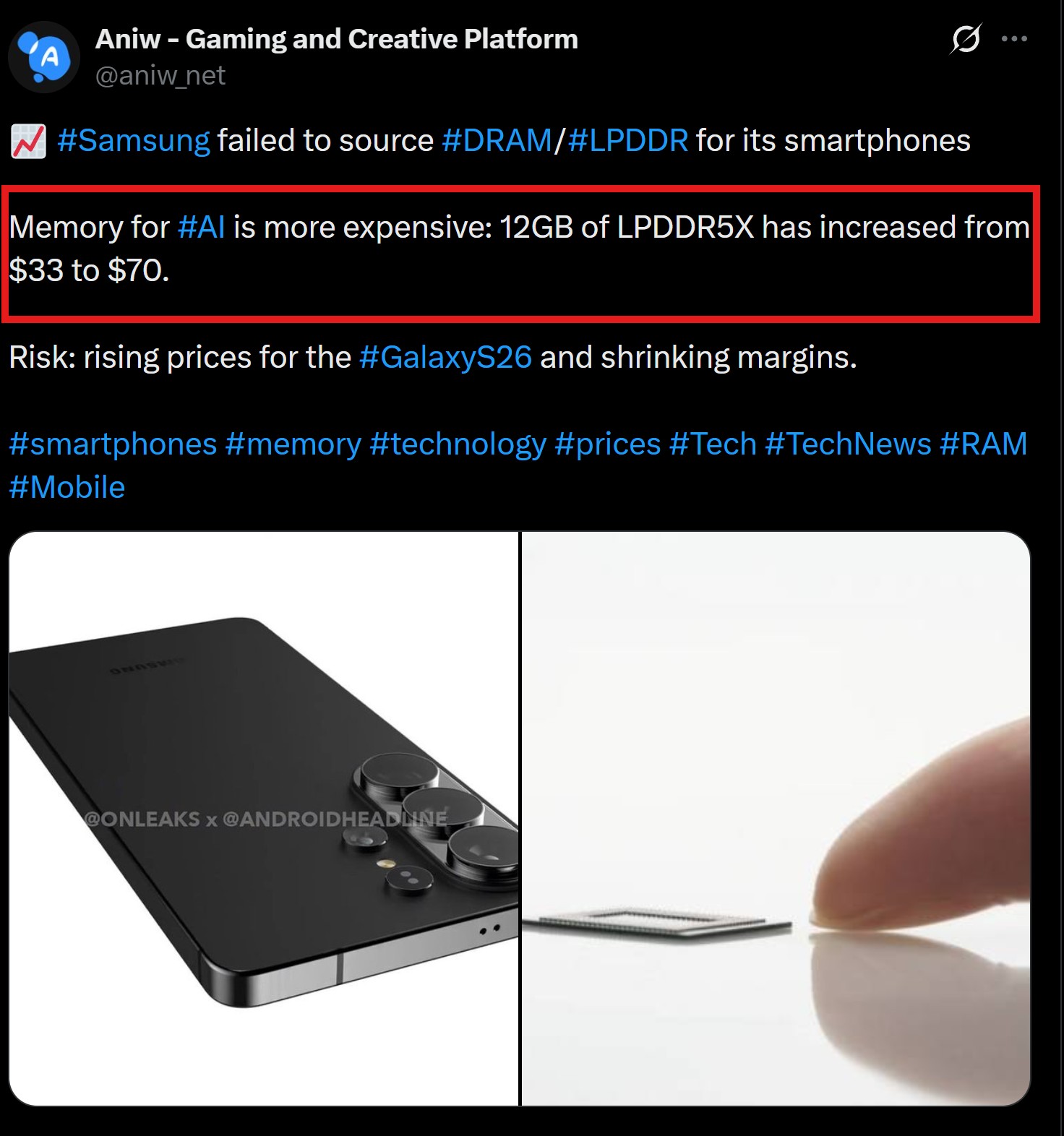
S2 uses this memory, it will have to compete with Samsung and other phone manufacturers. But of course "consoles are immune to memory price increases" so nothing will happen 🤡
 
The original Switch is still selling fairly well in Japan. Heck, it just doubled the sales of the PS5 despite Sony doing a significant price drop.

The odds are decent it crawls beyond the PS2 sales eventually.

I mean ps2 will re?ain most successful home console even if the switch sells 200m ;).
 
YlAjSc2L2ZHVQ6Rw.jpg


S2 uses this memory, it will have to compete with Samsung and other phone manufacturers. But of course "consoles are immune to memory price increases" so nothing will happen 🤡

Samsung and companies should absorb this no issues. even for laptops. like lets be honest. when you paying 1k for laptop or a phone ( if not even more ). is the 50$ extra charge on Samsung phone or a laptop gonna kill u ? gtfo lol


However, for a stand alone DDR5 for PC builders ? yeah paying 400 instead of 180 for a ram can fuck off. Not upgrading.
 
Last edited:
Well it looks like Japan market will be the one to carry again Switch 2 sales if it will be expensive in other regions.
Nintendo is heavily subsidising the price of the Switch 2 in Japan and I can see them increasing the price of the system over there as well.

They're a margins company first and most.
 
What I don't understand is the terminalogy like the shares 'slid' and 'wiped out' $14 billion in market share.

Am I wrong in thinking that more shares were sold than people were willing to buy at the higher price, and it forced the sale price lower?

So what we have now is the price that the market thinks their shares are worth?
 
1XpFxehUeTqbScD2.jpg

Nintendo is confronting a significant jump in memory costs that is already affecting its hardware business. This quarter the company faces roughly a 41% increase for the 12 GB LPDDR5X modules used in the Switch 2, while 256 GB of NAND flash has risen by about 8%. Those increases raise the bill of materials for every product that depends on these components and have coincided with a pullback in the company's share price to levels not seen since May. The increased spending on components comes at a time when the new console must demonstrate its long-term commercial viability. Nintendo needs to keep investing in an ecosystem that is becoming increasingly costly to sustain.


via Tech PowerUp
This is what, $40 more on component costs?

Say sales are <20M for the next year (I assumed less than launch year figures). That's $800M maximum they would have to eat (in reality they are making a small profit on Switch 2 outside of Japan).

At worst this would just mean a $40 price hike is required on Switch 2 and more software being crossgen like Pokemon to offset slower installbase growth. What might happen though is that they keep the price the same and eat that cost (less likely but very much possible for Nintendo to do).
 
Last edited:
YlAjSc2L2ZHVQ6Rw.jpg


S2 uses this memory, it will have to compete with Samsung and other phone manufacturers. But of course "consoles are immune to memory price increases" so nothing will happen 🤡
Read above for possibility of loss leading platform holders to offset higher component cost vs smartphone sales, which rely purely on that hardware margin in their business model. Not saying Switch 2 will not be affected by a possible price hike it probably will but maintaining hardware sales for install base for subsequent software sales is a lot more important for Nintendo than it is for Huawei or Samsung or Corsair just selling hardware. They are more likely to eat costs than them. You are already seeing that right now with PS dropping the price of PS5 to $399 during Christmas.
 
Last edited:
YlAjSc2L2ZHVQ6Rw.jpg


S2 uses this memory, it will have to compete with Samsung and other phone manufacturers. But of course "consoles are immune to memory price increases" so nothing will happen 🤡
Switch 2 also uses NAND ( also on game cartridges), I think there are a lot of Nintendo users that think Nintendo just will eat up costs without increasing the system price.
 
Samsung and companies should absorb this no issues. even for laptops. like lets be honest. when you paying 1k for laptop or a phone ( if not even more ). is the 50$ extra charge on Samsung phone or a laptop gonna kill u ? gtfo lol


However, for a stand alone DDR5 for PC builders ? yeah paying 400 instead of 180 for a ram can fuck off. Not upgrading.
Could companies absorb these increases? Sure. Will they? No. They're not running charities and corporate greed exists. There's a reason Switch 1 has been on the market for eight years and has actually seen an increase in price. Buckle in, this is the way of the future.
 
Could companies absorb these increases? Sure. Will they? No. They're not running charities and corporate greed exists. There's a reason Switch 1 has been on the market for eight years and has actually seen an increase in price. Buckle in, this is the way of the future.
Iam not buckling in anything. already have a 5090 with 32gb of Vram. already have switch 2. I am good to go for another 2 to 3 years easily. i am not even upgrading to the 6090 because I think the upgrade from the 4090 to 5090 was worthless it but I did it anyway for display 2.1 and extra vram. not for the power difference.

And I highly doubt the 6090 is gonna be cheap card anyway and I am already done paying too much. I already think the 5090 FE at 2k price was too much for gaming only purpose. i would have been happy still with the 4090 or hell even a 5070 ti.
 
For simplicity it is
All other factors remains pretty much the same and they imply what investors see a "fair" p/e for company. And largest shareholders (all those funds and trusts) look at p/e (ROE) for their judgement of investments.
Not a convention for all companies across all sectors at all, and by all investor types.

You're simply wrong.
 
What I don't understand is the terminalogy like the shares 'slid' and 'wiped out' $14 billion in market share.

Am I wrong in thinking that more shares were sold than people were willing to buy at the higher price, and it forced the sale price lower?

So what we have now is the price that the market thinks their shares are worth?
Headliners like that are more about the speed of events rather than the function of the market.

If you have a house that's worth $500 000 today, unexpected news drop, the housing market crashes and your house is now worth $500 - $495 500 was "wiped out" overnight.

But similarly you now have a new price that the market thinks your house is worth.
 
Last edited:
Not a convention for all companies across all sectors at all, and by all investor types.

You're simply wrong.
It's a basis for fundamental valuation. And fundamentals are a basis for company valuation and all other things oscillates around it.
By theory in a perfect market with perfect information equity price of company is fully determinable (ROE=RFR+COR). In reality both market and information are imperfect that lead to volatity, but there are market agents those diminish these imperfections.
Simply put - you know nothing.
 
Last edited:
RAM prices could possibly hike up the sales for streaming only devices like the PS Portal. You don't need much RAM for that.

Just a theory.
 
Read above for possibility of loss leading platform holders to offset higher component cost vs smartphone sales, which rely purely on that hardware margin in their business model. Not saying Switch 2 will not be affected by a possible price hike it probably will but maintaining hardware sales for install base for subsequent software sales is a lot more important for Nintendo than it is for Huawei or Samsung or Corsair just selling hardware. They are more likely to eat costs than them. You are already seeing that right now with PS dropping the price of PS5 to $399 during Christmas.

Phone manufacturers should have much higher margins than Nintendo. Nintendo at the same time has higher margins than Sony or MS.

PS5 so far wasn't affected because Sony has many units manufactured in advance, I have no doubt they also have some memory stock for future units. But all this will deplate at some point.

If this memory crisis is 12 months or longer, price increases are inevitable.
 
Last edited:
What I don't understand is the terminalogy like the shares 'slid' and 'wiped out' $14 billion in market share.

Am I wrong in thinking that more shares were sold than people were willing to buy at the higher price, and it forced the sale price lower?

So what we have now is the price that the market thinks their shares are worth?
What headline would you click on: "Nintendo Bleeds $14 Billion Market Cap" or, "Nintendo Shares Slide 4.7%"?

Both are technically correct but one sounds more alarming than the other. Just headline bait.
 
It's a basis for fundamental valuation. And fundamentals are a basis for company valuation and all other things oscillates around it.
By theory in a perfect market with perfect information equity price of company is fully determinable (ROE=RFR+COR). In reality both market and information are imperfect that lead to volatity, but there are market agents those diminish these imperfections.
Simply put - you know nothing.
You're talking out your ass.

All your talk of perfect markets and perfect information completely ignore the fact that there is no symmetry in any two organisations even within the same business sector, providing the same services to the market.

There are far too many factors that fundamentally erode valuation weighting against your simpleton formula, sometimes by at least an order of magnitude or two.

You think I know nothing about a sector I've been professionally established in for well over two decades?

Keep your Dunning Kruger superiority complex young man and recognise that whatever they taught you in school that you think is gospel, is at best naive and at worst, woefully out of date.

Bottom line however, is there is no such thing as deterministic equity pricing, valuation or risk quantification, because no real world market is deterministic (or "perfect").

If you think it is then best of luck to you trading and losing all of your money son.
 
Last edited:
You're talking out your ass.
No, I am not. I am in quant/trading/finance for same 20 years and I know a thing or two about how this stuff work.
And you are just like a little child bickering "I disagree, you are wrong, blablabla"

You think I know nothing about a sector I've been professionally established in for well over two decades?
If you don't know that market revalues companies on their profit expectation changes, I don't really know what you did for two decades, bring coffee for everyone?
 
Phone manufacturers should have much higher margins than Nintendo. Nintendo at the same time has higher margins than Sony or MS.
They have higher margins than nintendo but they will 100% get lower profit if phone manufacturers eat the increased cost. There is literally no benefit of eating the increased cost for phone manufacturers.
PS5 so far wasn't affected because Sony has many units manufactured in advance, I have no doubt they also have some memory stock for future units. But all this will deplate at some point.

If this memory crisis is 12 months or longer, price increases are inevitable.
They have many units manufactured but why discount PS5s do you think? Surely they would have been better off just selling slowly at regular price to whether this crisis better or even increasing price and taking advantage of that stock of low price RAM they had to push higher profits. You know the answer why though.

Console manufacturers are far more prepared to eat costs on hardware in the hope of selling games and subscriptions! If the price is higher their model of selling games is affected.

This is an advantage of console pricing. Why is this fact so difficult to admit?
 
Last edited:
1XpFxehUeTqbScD2.jpg

Nintendo is confronting a significant jump in memory costs that is already affecting its hardware business. This quarter the company faces roughly a 41% increase for the 12 GB LPDDR5X modules used in the Switch 2, while 256 GB of NAND flash has risen by about 8%. Those increases raise the bill of materials for every product that depends on these components and have coincided with a pullback in the company's share price to levels not seen since May. The increased spending on components comes at a time when the new console must demonstrate its long-term commercial viability. Nintendo needs to keep investing in an ecosystem that is becoming increasingly costly to sustain.


via Tech PowerUp

Goodbye Japan. Switch 2 sales at loss will be finish...
 
The fact that demand is far outpacing the ability to produce technology products is concerning. We need more manufacturing.
 
Top Bottom