
He can't explain the delay but pretends to know by incorrectly stating they were doing different training.You can't train an Ai model in Int8. All training is done in FP.

-
Hey Guest. Check out your NeoGAF Wrapped 2025 results here!
You are using an out of date browser. It may not display this or other websites correctly.
You should upgrade or use an alternative browser.
You should upgrade or use an alternative browser.
Cerny confirms PSSR2 and FSR4.1 use same neural network
- Thread starter YCoCg
- Start date

Mr.Phoenix
Member
No... all training is done in FP. You can't train in int8 because of a values limitation, the training model simply will not work. So even when training for an int execution unit, they use FP that is "pretending" to be int. FP preends to be Int by adding fake noise into the training model to account for the rounding errors that are unavoidable with INT.No. It's done using a mix of data formats. Including Integers.
But even after training, the resulting model can be quantitized into lower precision models.
Once the training is done however, it can be compressed down to INT... but it will never be as accurate as a model running in FP. This could explain why even as great as PSSR2 is, there is a tell with how it handles super fine repetitiuve detail with that weird pointilism thing it does.

winjer
Gold Member
No... all training is done in FP. You can't train in int8 because of a values limitation, the training model simply will not work. So even when training for an int execution unit, they use FP that is "pretending" to be int. FP preends to be Int by adding fake noise into the training model to account for the rounding errors that are unavoidable with INT.
Once the training is done however, it can be compressed down to INT... but it will never be as accurate as a model running in FP. This could explain why even as great as PSSR2 is, there is a tell with how it handles super fine repetitiuve detail with that weird pointilism thing it does.
Int is also used, although in limited scale. Such as with in Quantization-Aware Training.
Still, quantitizing a trained model to Int8, is the easy part of the process.
Besides, I never said that training was done in Int8.
Last edited:
Mr.Phoenix
Member
I believe QAT is when training is done with FP that pretends to be INT by adding fake noise into the model. INT is mathematically incapable of being used for training a model, thats why training is done in FP. QAT trains a model using FP that is already accounting for the limitations of INT, its still technically an FP output, just rounded down for INT. The great thing is that the same output can run natively in FP too. In its pre-rounded form of course.Int is also used, although in limited scale. Such as with in Quantization-Aware Training.
Still, quantitizing a trained model to Int8, is the easy part of the process.
This is likely how sony and AMD's models are trained. Trained using QAT, rounded down and exported for INT while the OG (before rounding) value is ran natively in FP. This is how they can train one model that caters to both platforms. And even with PSSR3, sony is likely sticking with INT, for all Ai functions except those that explicitly need FP.
Last edited:
winjer
Gold Member
I believe QAT is when training is done with FP that pretends to be INT by adding fake noise into the model. INT is mathematically incapable of being used for training a model, thats why training is done in FP. QAT trains a model using FP that is already accounting for the limitations of INT, its still technically an FP output, just rounded down for INT. The great thing is that the same output can run natively in FP too.
This is likely how sony and AMD's models are trained. Trained using QAT, rounded down and exported for INT while the OG (before rounding) value is ran natively in FP. This is how they can train one model that caters to both platforms. And even with PSSR3, sony is likely sticking with INT, for all Ai functions except those that explicitly need FP.
We are saying the same thing essentially.
But I never said training was done in Int8. I don't even understand why you suddenly started this line of argument.
Mr.Phoenix
Member
My bad, you said something about converting from FP to INT not being the problem and that what was, was the training. I thought you were saying that its training in INT that was a problem. I also felt that training in general isn't ven a problem because of QAT, which is most likely what is being used here by both sony and AMD because it kills two biirds with one stone.We are saying the same thing essentially.
But I never said training was done in Int8. I don't even understand why you suddenly started this line of argument.
Because you claimed the training is the hard time consuming part making it seem like they had to do something different. The argument didn't make sense.We are saying the same thing essentially.
But I never said training was done in Int8. I don't even understand why you suddenly started this line of argument.
winjer
Gold Member
My bad, you said something about converting from FP to INT not being the problem and that what was, was the training. I thought you were saying that its training in INT that was a problem.
My reference was just that training a model takes a lot more time and effort, than to quantitize it to different data formats, such as FP8 and Int8. I never said anything about which data formats are used in training.
I also felt that training in general isn't ven a problem because of QAT, which is most likely what is being used here by both sony and AMD because it kills two biirds with one stone.
AMD and Sony probably had to develop special techniques in a joint effort to be able to easily and quatitize these models into either RDNA4 and the Pro.
winjer
Gold Member
Because you claimed the training is the hard time consuming part making it seem like they had to do something different. The argument didn't make sense.
That is because training a model really is the hardest part of the process. Converting the model to a lower data format is the easy part of the whole process.
Mr.Phoenix
Member
Yup... it's definitely the hardest part. Or at least the most time-consuming part.That is because training a model really is the hardest part of the process. Converting the model to a lower data format is the easy part of the whole process.
winjer
Gold Member
Yup... it's definitely the hardest part. Or at least the most time-consuming part.
And energy consuming.
Sure but why did you bring it up as if it proved that the reason FSR4 didn't come to PS5 Pro but FSR4.1 did was due to training?That is because training a model really is the hardest part of the process. Converting the model to a lower data format is the easy part of the whole process.
Your argument didn't make sense at all. People inferred that you were claiming they had to train in int8 for the Pro.
You completely dodged my post asking you this too. You still haven't explained how the easy part (not the training you claimed was time consuming) prevented FSR4 on PS5 Pro happening earlier.
Last edited:
winjer
Gold Member
Sure but why did you bring it up as if it proved that the reason FSR4 didn't come to PS5 Pro but FSR4.1 did was due to training?
Your argument didn't make sense at all. People inferred that you were claiming they had to train in int8 for the Pro.
You completely and dodged my post asking you this too. You still haven't explained how the easy part (not the training you claimed was time consuming) prevented FSR4 on PS5 Pro happening earlier.
Because FSR4 was designed with and for AMD's software stack. RoCm and Hip.
It targeted the performance metrics of RDNA4 and it's ML units.
And it's quantitization process was developed for FP8.
It also has to take into account the OS and API. Which are very different. Just consider that AMD still has not made a version of FSR4 for Vulkan.
So it took time to develop a common software stack, and quantitization processes.
If Sony was making FSR4 from the very start, with the goal of putting it on the Pro, then FSR4.0 would be there a year ago. Instead it's here now, with FSR4.1
Last edited:
MisterXDTV
Member
Because FSR4 was designed with and for AMD's software stack. RoCm and Hip.
It targeted the performance metrics of RDNA4 and it's ML units.
And it's quantitization process was developed for FP8.
It also has to take into account the OS and API. Which are very different.
So it took time to develop a common software stack, and quantitization processes.
If Sony was making FSR4 from the very start, with the goal of putting it on the Pro, then FSR4.0 would be there a year ago. Instead it's here now, with FSR4.1
I'm not exactly sure, why are you talking about this
They skipped 4.0 and decided to go straight to a "4.1" equivalent....
Who cares at this point?
But this was exactly what you were dismissing as the reason for that delay:And it's quantitization process was developed for FP8.
It also has to take into account the OS and API. Which are very different. Just consider that AMD still has not made a version of FSR4 for Vulkan.
So it took time to develop a common software stack, and quantitization processes.
If Sony was making FSR4 from the very start, with the goal of putting it on the Pro, then FSR4.0 would be there a year ago. Instead it's here now, with FSR4.1
And you replied:Has nothing to do with it. You clearly said
Blatantly incorrect. These things do take time to develop which was why PSSR was launched earlier. They continued working on the next iteration which was FSR4 but the algorithm was fp8 while the delayed PS5 Pro was int8. That took time and effort to implement and AMD did not even bother doing so for their older PC GPUs. Doesn't mean PSSR and FSR4 were separate models before though.
They had trained FSR4 already. Why were you bringing up the training if the next step of quantitization, API/OS, etc was the easy part? That's why people inferred that you're trying to suggest there was some additional time consuming training specifically for int8/PS5 Pro.Converting a model from Int8 to FP8 and vice versa is not the thing that takes more time. It's the training.
Saying that Sony was using PSSR1 for a year, while having made FSR4, makes no sense at all.
The argument didn't make sense. You then continued to dismiss AMD and Cerny tweets explicitly stating the joint development of FSR4.
Last edited:
winjer
Gold Member
But this was exactly what you were dismissing as the reason for that delay:
And you replied:
They had trained FSR4 already. Why were you bringing up the training if the next step of API/OS, etc was the easy part? That's why people inferred that you're trying to suggest there was some additional time consuming training specifically for int8/PS5 Pro.
The argument didn't make sense. You then continued to dismiss AMD and Cerny tweets explicitly stating the joint development of FSR4.
You don't just develop a model. It requires a software stack, both for development and for running the model.
AMD started developing FSR4 targeting RDNA4, on Windows, in DirectX, to run on FP8 quatitization. And that is what came out of FSR4.0
When Sony entered the picture, a lot had to be added and/or changed in the process. And it took time, until we got FSR4.1
Training doesn't rely on windows, DirectX or int8. It was the "running the model" on PS5 Pro that you were refuting and claiming was easy to do despite it being int8 and RDNA2, claiming it didn't explain the time it took to come to Pro but suggesting training did. What you were saying made no logical sense, sorry.You don't just develop a model. It requires a software stack, both for development and for running the model.
AMD started developing FSR4 targeting RDNA4, on Windows, in DirectX, to run on FP8 quatitization. And that is what came out of FSR4.0
When Sony entered the picture, a lot had to be added and/or changed in the process. And it took time, until we got FSR4.1
Last edited:
winjer
Gold Member
Training doesn't rely on windows, DirectX or int8. It was the "running the model" on PS5 Pro that you were refuting and claiming was easy to do despite it being int8 and RDNA2, claiming it didn't explain the time it took to come to Pro but training did. What you were saying made no logical sense, sorry.
OMG, you can't be serious. Do you really think a model just runs on itself by magic?

mckmas8808
Mckmaster uses MasterCard to buy Slave drives
FSR 5/Diamond are transformer models for upscaling/framegen/denoising built for RDNA5. Will be pretty much 100% identical between PS6/Xbox Helix/RDNA5 dGPUs regardless of whatever branding each one uses.
Oh WOW! Okay, I like where AMD is headed now.
Maybe Sony made a deal to have the only INT8 version avaliable, who knows.
Never considered this. But this sounds interesting.
What does that even mean? A trained model is not really dependant on "DirectX and windows". It's running that trained model on different hardware/OS/int8 that requires work but you dismissed that time consuming work to mention 'training' as the issue when the model exists.OMG, you can't be serious. Do you really think a model just runs on itself by magic?
Last edited:
winjer
Gold Member
What does that even mean? A trained model is not really dependant on "DirectX and windows". It's running that trained model on different hardware/OS/int8 that requires work but you dismissed that time consuming work to mention 'training' as the issue when the model exists.
LOL, you really think that a model like FSR4 just runs on thin air.

"running" is not the same as "training". FSR4.1's trained models aren't specific to PS5 Pro, windows Direct X, it didn't require separate training.LOL, you really think that a model like FSR4 just runs on thin air.
Running it on its hardware with only int8 RDNA2 is specific and that was exactly what you were dismissing as the reason for the time it took to come, in favour of 'training' being the reason you stated. Hence why people inferred you meant it required different "training" using int8. It's not hard to understand unless your skull runs on thin air.
winjer
Gold Member
"running" is not the same as "training". FSR4.1's trained models aren't specific to PS5 Pro, windows Direct X, it didn't require separate training.
Running it on its hardware with only int8 RDNA2 is specific and that was exactly what you were dismissing as the reason for the time it took to come, in favour of 'training' being the reason you stated. Hence why people inferred you meant it required different "training" using int8. It's not hard to understand unless your skull runs on thin air.
Even for training you need a complete software stack. From the OS, programs, programming languages, APIs, drivers, etc.
Of course you do but you end up with a mathematical model that can be portable. Your model isn't strictly tied to a programming language, API, OS etc. You can make it work wherever/however you like. People have brought FSR4 to Vulkan, they didn't train new models for it did they?Even for training you need a complete software stack. From the OS, programs, programming languages, APIs, drivers, etc.

kevboard
Member
It's FSR4.1 int8 basically. And that was denied by many people here...
so basically, I am using PSSR2 on my Steam Deck

winjer
Gold Member
Of course you do but you end up with a mathematical model that can be portable. Your model isn't strictly tied to a programming language, API, OS etc. You can make it work wherever/however you like. People have brought FSR4 to Vulkan, they didn't train new models for it did they?
Your model does nothing without connecting to the proper driver, API, OS.
Salty Pickle
Member
I'm confused, you're saying the pro is rdna2?"running" is not the same as "training". FSR4.1's trained models aren't specific to PS5 Pro, windows Direct X, it didn't require separate training.
Running it on its hardware with only int8 RDNA2 is specific and that was exactly what you were dismissing as the reason for the time it took to come, in favour of 'training' being the reason you stated. Hence why people inferred you meant it required different "training" using int8. It's not hard to understand unless your skull runs on thin air.

Bojji
Member
I'm confused, you're saying the pro is rdna2?
Pro raster part is RDNA2.
RT is from RDNA4 and ML is custom. Frankenstein console.
Salty Pickle
Member
Yeah that's what I thought, don't get the rdna2 int8 reference.Pro raster part is RDNA2.
RT is from RDNA4 and ML is custom. Frankenstein console.
It's custom RDNA with some features from RDNA3 and 4. Didn't want to start that irrelevant debate again.I'm confused, you're saying the pro is rdna2?
Madserb2023
Member
The PS5 Pro has a custom chip. The GPU is not available outside of the PS5 Pro to test. No direct equivalent that you can buy for PC. Neither is PSSR 2 available outside the PS5 Pro. Mark Cerny says it uses the same neural network as FSR 4.1 and he has no reason to lie. How it achieves this could be through specific hardware in the chip itself. It doesn't help that both AMD and Nvidia clearly hold back features to sell their latest GPU. It would be odd for the PS5 Pro to be capable of better upscaling than a 7800XTX which is why you get the disbelief around PSSR 2 being FSR 4.1 but that would be in keeping with with these companies.

Mr Moose
Gold Member
This answers the question earlier why they took forever with PSSR2"Great questions, particularly considering that FSR Frame Generation is technology that was co-developed between SIE and AMD, we're intimately familiar with it," Cerny revealed. "All I can say is that we have no more releases planned for this year. And that I look forward to discussing this more in the future!"
 winjer
.
winjer
.Because they are slow.

DenchDeckard
Moderated wildly
I think it makes sense that AMD would use the same tech with Sony to make both FSR 4.1 and PSSR 2. I think we should just be happy that AMD cards and this the Pro now have great ML upscalers and, they're only gonna get better.

Mark Cerny Confirms Frame Generation "Should Be Seen At Some Point On PlayStation Platforms"
"I look forward to discussing this more in the future!"
 www.digitalfoundry.net
This almost confirms no Frame Generation for Pro.
Last edited:
mckmas8808
Mckmaster uses MasterCard to buy Slave drives
Mark Cerny Confirms Frame Generation "Should Be Seen At Some Point On PlayStation Platforms"
"I look forward to discussing this more in the future!"
This almost confirms no Frame Generation for Pro.
I think this statement means it's coming next year in 2027.
"I'm very happy with how that work is progressing, and an equivalent frame generation library should be seen at some point on PlayStation platforms."
It's hard for me to see them releasing it for PS6 and not PS5 Pro when most games in 2027 will be cross-gen.
I think they would release this year specially for GTA VI if they are really doing on ProI think this statement means it's coming next year in 2027.
It's hard for me to see them releasing it for PS6 and not PS5 Pro when most games in 2027 will be cross-gen.
Bojji
Member
Mark Cerny Confirms Frame Generation "Should Be Seen At Some Point On PlayStation Platforms"
"I look forward to discussing this more in the future!"
This almost confirms no Frame Generation for Pro.
Or PS6 (or both).
mckmas8808
Mckmaster uses MasterCard to buy Slave drives
I think they would release this year specially for GTA VI if they are really doing on Pro
Or maybe they don't trust R* will a release date, so there's no strong need to rush it.

CrustyBritches
Gold Member
Nothing would stop devs from using FSR3 FG like Wukong does. It just wouldn't be the new Redstone ML FG. It's still quite good. Even AFMF is good when you are starting from higher FPS.

Buggy Loop
Gold Member
so basically, I am using PSSR2 on my Steam Deck
At that point, why would base PS5 not benefit, it's clearly not about TOPs that much.

MrAlwaysRight
Member
kevboard
Member
At that point, why would base PS5 not benefit, it's clearly not about TOPs that much.
base PS5 is RDNA1 with RT hardware added, while Steam Deck is RDNA2... that's the main issue.
Xbox Series X however... that should work without much issue, and the increased number CUs there should help as well.
so it's kinda surprising that Microsoft isn't talking to AMD to bring FSR4 to Xbox consoles.
Last edited:
Buggy Loop
Gold Member
base PS5 is RDNA1 with RT hardware added, while Steam Deck is RDNA2... that's the main issue.
Xbox Series X however... that should work without much issue, and the increased number CUs there should help as well.
so it's kinda surprising that Microsoft isn't talking to AMD to bring FSR4 to Xbox consoles.
PS5's version of the GPU didn't include the "limited" but still available RDNA 2 ML ? I thought it did but those hardware debates from so many years ago I guess I forgot. They're fucked then if that's the case. What a missed opportunity.
kevboard
Member
PS5's version of the GPU didn't include the "limited" but still available RDNA 2 ML ? I thought it did but those hardware debates from so many years ago I guess I forgot. They're fucked then if that's the case. What a missed opportunity.
afaik not even the PS5 Pro has all RDNA2 features. that's why PSSR uses a modified version of FSR4 that runs on their custom ML hardware.
base PS5 is RDNA1 at its core. the only important feature from RDNA2 that Sony wanted was the RT intersection accelerators
Last edited:
winjer
Gold Member
PS5's version of the GPU didn't include the "limited" but still available RDNA 2 ML ? I thought it did but those hardware debates from so many years ago I guess I forgot. They're fucked then if that's the case. What a missed opportunity.
RDNA2 only has DP4A.
The PS5 doesn't even have that.
Buggy Loop
Gold Member
afaik not even the PS5 Pro has all RDNA2 features. that's why PSSR uses a modified version of FSR4 that runs on their custom ML hardware.
Then Microsoft is sleeping at the wheel if they have full RDNA 2 ML. It would be a nice upgrade for Series S and Series X. If you have it running on a Steam deck, there's no reasons those consoles would not benefit. Of course, might be a game to game basis depending on performances, but say, perhaps a game that used to be 60 fps would have FSR 4.1 in 40 fps mode (? realistic performance drop?) and I imagine a lot of peoples would be happy.
MisterXDTV
Member
Xbox Series X however... that should work without much issue, and the increased number CUs there should help as well.
so it's kinda surprising that Microsoft isn't talking to AMD to bring FSR4 to Xbox consoles.
LOL
Series X GPU has 49 INT8 TOPS
How exactly could it run FSR4 when the minimum spec of RDNA4 is like 200???
Last edited:
MazingerDUDE
Member
LOL
Series X GPU has 49 INT8 TOPS
How exactly could it run FSR4 when the minimum spec of RDNA4 is like 200???
If SteamDeck can, I'm sure XSX is able too.
I think it's not too late for MS to make a move.
winjer
Gold Member
Then Microsoft is sleeping at the wheel if they have full RDNA 2 ML. It would be a nice upgrade for Series S and Series X. If you have it running on a Steam deck, there's no reasons those consoles would not benefit. Of course, might be a game to game basis depending on performances, but say, perhaps a game that used to be 60 fps would have FSR 4.1 in 40 fps mode (? realistic performance drop?) and I imagine a lot of peoples would be happy.
Microsoft had a program developing an ML upscaler, even before the release of this generation. They even showed a few pictures of it. But it never went anywhere.
Something like XeSS DP4A path can run on RDNA2, within 5-10% performance of FSR3.1, while looking significantly better. Had MS developed something similar, they could have a better upscaler than any other console, asides from the Pro.
FSR4 is significantly heavier. RDNA2 could use it for lower resolutions and smaller upscale factors.
But doing something like 1080 to full 4K in FSR4 could be troublesome.
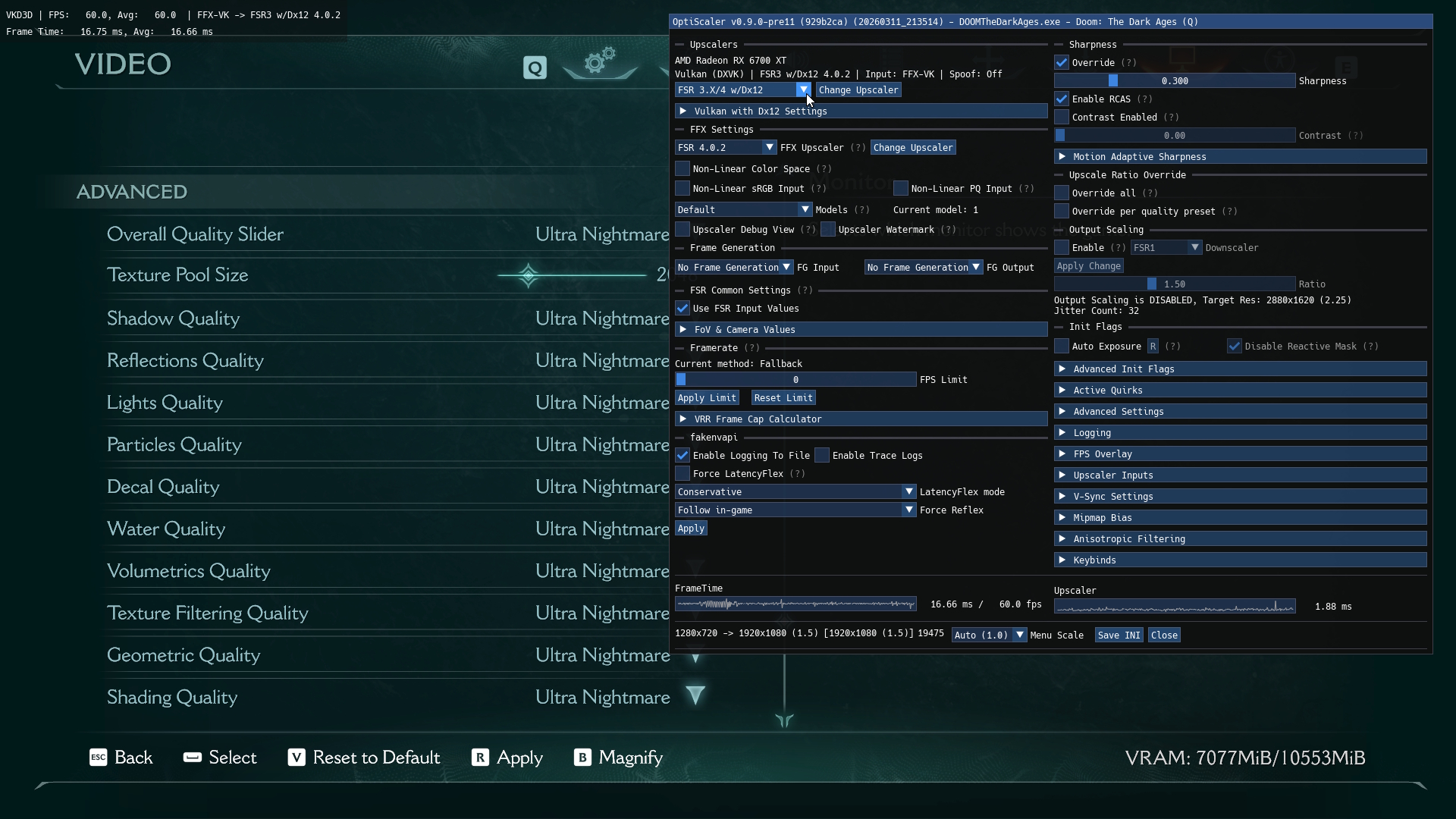
This is an example of the FSR4 Int8 model leaked by AMD, running on a 6700XT. It's upscaling from 720p to 1080p.
But it has to use Optiscaler and a Vulkan translation layer, so there is some overhead. A proper optimized version could shave a few points of ms.
Be it on RDNA2 or RDNA3, this leaked dll of FSR4 int8, uses only DP4A. Though RNA3 has WMMA instructions to accelerate ML.
Last edited:
kevboard
Member
Then Microsoft is sleeping at the wheel if they have full RDNA 2 ML. It would be a nice upgrade for Series S and Series X. If you have it running on a Steam deck, there's no reasons those consoles would not benefit. Of course, might be a game to game basis depending on performances, but say, perhaps a game that used to be 60 fps would have FSR 4.1 in 40 fps mode (? realistic performance drop?) and I imagine a lot of peoples would be happy.
in most games they could drop the internal resolution while targeting the same output the game pushed for with FSR2/3 and be fine I bet.
the quality difference is absolutely insane, even on a low resolution system like the Steam Deck.
I posted comparisons in another thread a few weeks back
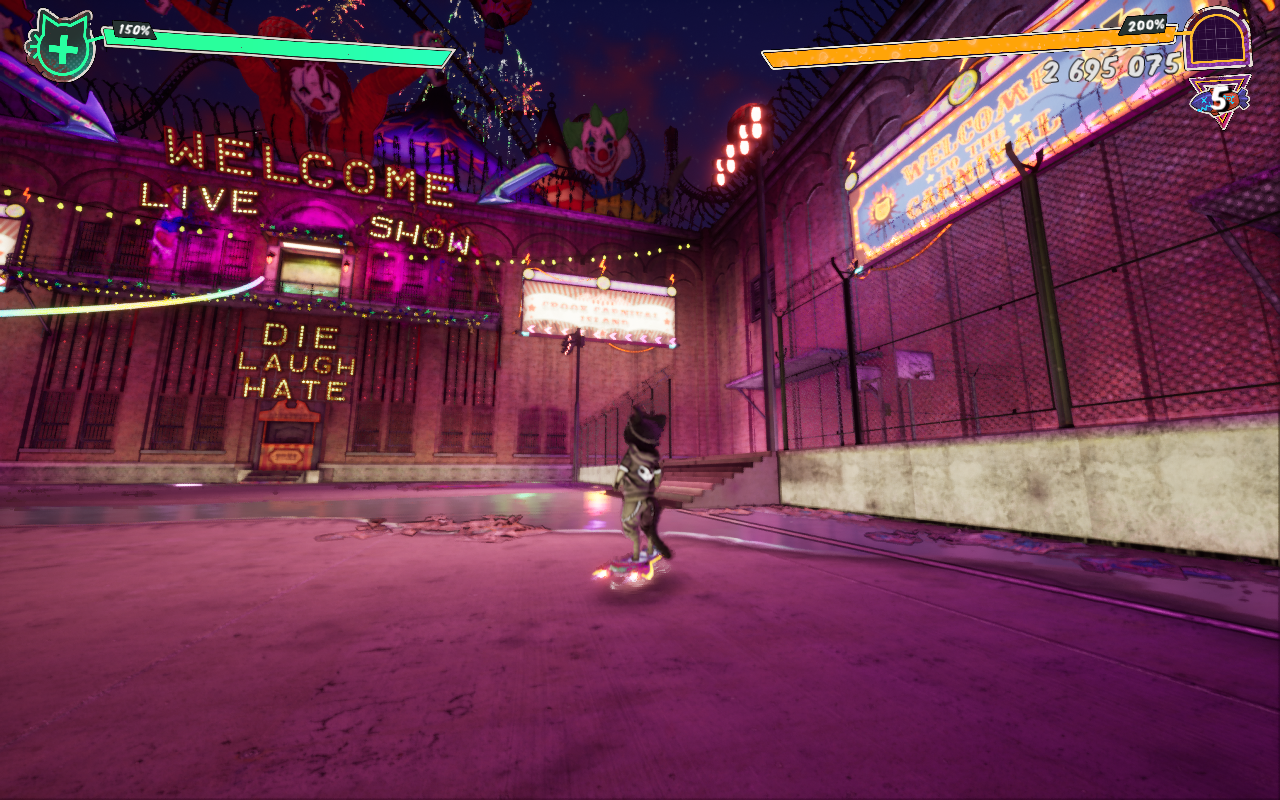
just to show a quick comparison:
XeSS quality mode
FSR4 balanced mode
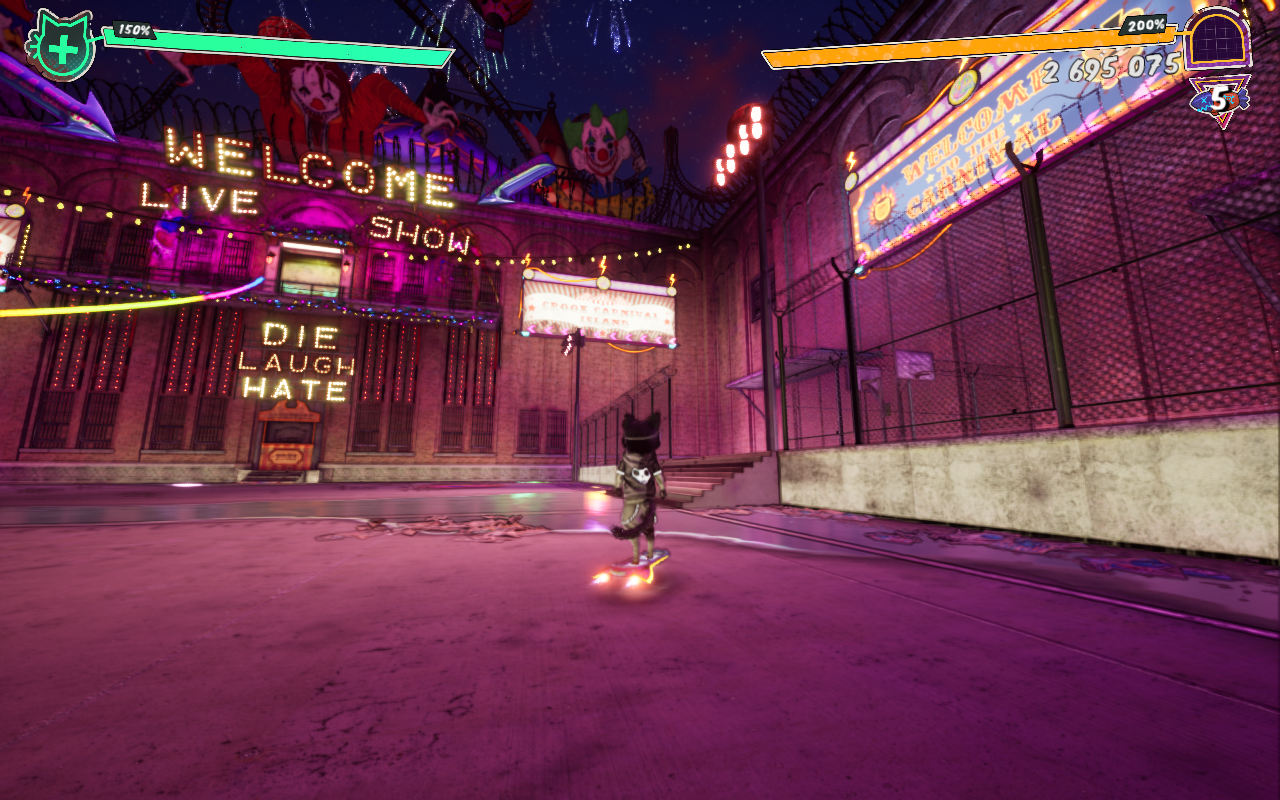
and in motion, the difference is even more in favor of FSR4.
both give me a solid 60fps (aside from UE4 typical I/O stutter)
and that's XeSS vs FSR4, not even FSR3... FSR3 would look even worse than the XeSS example (the game doesn't support FSR2/3 tho... so...)
still shots also don't show how much better it looks in motion, where FSR4 completely shits on XeSS in this game.
XeSS Quality Mode:

FSR4 int8 Balanced Mode:

Last edited: