• Hey Guest. Check out your NeoGAF Wrapped 2025 results here!

The Best Mechanics From "Bad" Games

RedC

Member

There are so many aspects that make up a video game, and this means incredible ideas have the opportunity to exist alongside terrible ones, turning the game as a whole into something not all that remarkable despite containing aspects that are. This video is an examination and celebration of a few games that fall into this category.

"Great Mechanics Trapped In Flawed Games" Video Essay Summary


Core Thesis

The essay argues:
  • many "bad" or mediocre games contain:
    • incredible mechanics
    • brilliant systems
    • unique ideas
that were:
  • buried under:
    • rushed development
    • poor balancing
    • weak structure
    • trend chasing
    • technical limitations
Main argument:
  • game design conversations focus too heavily on:
    • successful games
  • while ignoring:
    • failed experiments
    • abandoned ideas
    • unrealized mechanical potential.

Bionic Commando (2009)

General Assessment

Described as:
  • the definition of a "360-ass game"
Criticized for:
  • incomprehensible story
  • repetitive combat
  • generic military-shooter aesthetic
  • middling encounter design

But The Grappling Hook Is Incredible

The video heavily praises:
  • Nathan Spencer's bionic arm mechanics
Key strengths:
  • momentum-based swinging
  • skill expression
  • movement flow
  • traversal versatility
Reviewer especially loves:
  • timing swings manually
  • chaining movement
  • physics-driven momentum

Combat Potential

Mechanics allow:
  • kicking enemies mid-swing
  • grabbing objects/enemies
  • throwing vehicles and debris
Reviewer says:
  • brief moments reveal:
    • "what Bionic Commando could have been"

Main Problem

The wider game:
  • never evolves the mechanic properly
Issues:
  • linear level design
  • invisible radiation boundaries
  • repetitive enemy encounters
  • lack of enemy variety
  • shallow progression

Core Design Critique

The reviewer argues:
  • throwing mechanics should have existed from the start
  • and expanded throughout game
Instead:
  • game introduces best combat mechanic halfway through
  • then barely builds upon it.

Fracture


Core Mechanic

Third-person shooter featuring:
  • terrain manipulation gun
Allows player to:
  • raise/lower terrain dynamically

Why It's Interesting

Creates:
  • dynamic cover systems
  • battlefield control
  • sightline manipulation
  • environmental tactics
Reviewer praises moments where:
  • reshaping terrain changes combat flow in real time.

Why It Fails

Problems include:
  • chaotic combat readability
  • weak gunplay
  • poor driving sections
  • repetitive bosses
  • screen shake overload
Result:
  • brilliant terrain system buried inside mediocre shooter structure.

Quest 64


Initial Criticism

Reviewer calls it:
  • one of the first games they ever disliked
Complaints:
  • empty world
  • awful camera
  • vague systems
  • weak writing
  • terrible pacing

But Combat Is Fascinating

The battle system:
  • occurs directly in overworld
  • uses:
    • positioning
    • terrain
    • spell trajectory
    • movement

Interesting Mechanics

Features:
  • dodgeable attacks
  • spatial spellcasting
  • tactical movement
  • varied elemental magic
Reviewer especially praises:
  • lack of explicit AoE indicators
because:
  • player learns spell behavior intuitively through experience.

Strategic Twist

Turn economy works differently:
  • enemy count affects action flow uniquely
Meaning:
  • killing weaker enemies first
  • is not always optimal strategy
Reviewer says:
  • combat feels unlike most JRPGs.

Shadwen


Core Idea

Stealth game attempting to solve:
  • frustrations common in stealth genre
Especially:
  • save scumming
  • punishment-heavy morality systems

Main Mechanics

Combines:
  • SUPERHOT-style time movement
  • Prince of Persia-style rewinds
Meaning:
  • time moves mostly when player moves
  • mistakes can be rewound freely

Why It's Interesting

Reviewer says:
  • mechanics encourage:
    • experimentation
    • tactical thinking
    • less frustration

Most Interesting System

Companion character:
  • Lily
Player can kill guards:
  • BUT:
    • Lily seeing corpses traumatizes her
Result:
  • bodies must be hidden:
    • not just from enemies
    • but from child companion
Reviewer calls this:
  • a genuinely brilliant moral-mechanical integration.

Why It Falls Apart

Problems:
  • terrible AI
  • janky stealth systems
  • unreliable encounters
  • weak encounter complexity
Result:
  • mechanics mostly compensate for broken AI
  • instead of enabling advanced stealth design.

Red Steel


General Assessment

Early Wii FPS with:
  • ambitious motion-control systems
Features:
  • gesture reloads
  • directional aiming
  • sword fighting
  • enemy disarming

Main Issue

Wii hardware precision:
  • simply wasn't ready yet
Result:
  • clunky gameplay
  • unreliable controls

But Multiplayer "Killer Mode" Was Amazing

Reviewer's favorite mechanic:
  • Wiimote phone-call system
Players receive:
  • secret assassination objectives
  • through speaker on Wiimote

Why It Worked

Created:
  • paranoia
  • social tension
  • mind games
  • couch multiplayer chaos
Reviewer says:
  • nothing else felt quite like it.

Geist


Core Mechanic

FPS where players:
  • possess objects and humans

Multiplayer Potential

"Hunt Mode":
  • ghosts possess humans
  • humans fight back physically against possession
Creates:
  • asymmetrical mind games
  • couch multiplayer chaos
Reviewer says:
  • multiplayer realized mechanic's potential better than single-player did.

Anthem


Key Point

Reviewer never played Anthem.

But:
  • now regrets never experiencing:
    • its flying mechanics
before servers shut down.


Main Preservation Argument

Because Anthem was:
  • online-only
its:
  • mechanics
  • feel
  • systems
are now effectively lost.


Important Point

The reviewer argues:
  • preserving games matters not only for consumers
  • but for:
    • future developers
    • mechanical study
    • inspiration
because:
  • failed games often contain ideas worth revisiting.

Broader Industry Critique

The essay criticizes:
  • modern AAA homogenization
Examples:
  • Dark Souls influence
  • Breath of the Wild influence
  • Balatro influence

Main Concern

Successful mechanics get:
  • copied endlessly
while:
  • unusual failed experiments disappear
Reviewer believes:
  • innovation often exists in flawed games
  • not just successful ones.

Key Philosophical Argument

One of the essay's strongest lines:
  • "the opposite of good is uninteresting."
Meaning:
  • flawed games can still matter deeply
  • if their mechanics remain:
    • unique
    • ambitious
    • memorable

Final Message

The essay ultimately argues:
  • gaming history should preserve:
    • weird games
    • failed experiments
    • abandoned systems
    • ambitious mistakes
because:
  • many contain untapped ideas
  • waiting for future developers
  • to refine into something great.
 
Great video. For me, this is not a "bad" game, but Vagrant Story comes to mind when talking about amazing game mechanics.

Vagrant Story is also super inscrutable because it has so many mechanics. I have a preferred way I used to play the game, which is by picking an element (Wind is the fastest one, I think) and pumping that number as high as it can go to overwhelm enemy defenses. Next time, I'll try something different, so I can basically wreck every fight I come across effortlessly and it's wild.
 
A little bit generic... but Batman: Arkham Origins and Bosses? Because you can clearly see that this game is not well made like the others (it's a different studio, after all), but the bosses are SO MUCH BETTER....
 
Last edited:
Yeah I'll take a kinda "bad" game that does some interesting stuff over a really safe mediocre game that doesn't really do anything interesting.

Um, the one at the top of my mind right now is sailing and navigating by compass in first person in Sea Dogs/Pirates of the Caribbean is really cool and unique, but those games aren't really very good overall imo, even with mods.

Banished is a survival city builder, kinda like Manor Lords, except it's got like 1/100th of the amount of features of Manor Lords. What is there is a solid foundation, though, and modders have done tons of interesting stuff to it

and then there's Forspoken and Star Wars Outlaws which I like and apparently almost no one else does lol, but that's different.
 
I'm still a little puzzled that no JRPG that I know of took the Dress Sphere system from FFX-2, renamed it, and used it again.

That game was ass, but the combat was pretty great.
 
not a bad game but the fact that the nemesis system from shadow of mordor hasnt been used in other games especially mixed with rougelite genre is kinda baffling.
 
hq720.jpg
 
I'm still a little puzzled that no JRPG that I know of took the Dress Sphere system from FFX-2, renamed it, and used it again.

That game was ass, but the combat was pretty great.
Lightning Returns kindasorta has a similar thing going. oh, and Infinity Nikki, kinda?

Also FFX-2 is great :messenger_angry:
Cat Burn GIF
 
Last edited:
JAWS Unleashed has the most amazing controls and dismemberment mechanics ever.


Seriously, you can't understand how incredible it feels to control with analog sticks unless you try it. It completely ruined 2020 Maneater for me, utter trash in comparison.
 
Last edited:
Even though I consider it one of the better games in the series, Splinter Cell: Double Agent is definitely undercooked.
That said, the JBA HQ missions where you have to play an actual double agent are some of the greatest stealth missions of the entire franchise.
 
not a bad game but the fact that the nemesis system from shadow of mordor hasnt been used in other games especially mixed with rougelite genre is kinda baffling.
They literally patented it just so nobody else could use it. Similar to how Namco patented loading screen minigames.
 
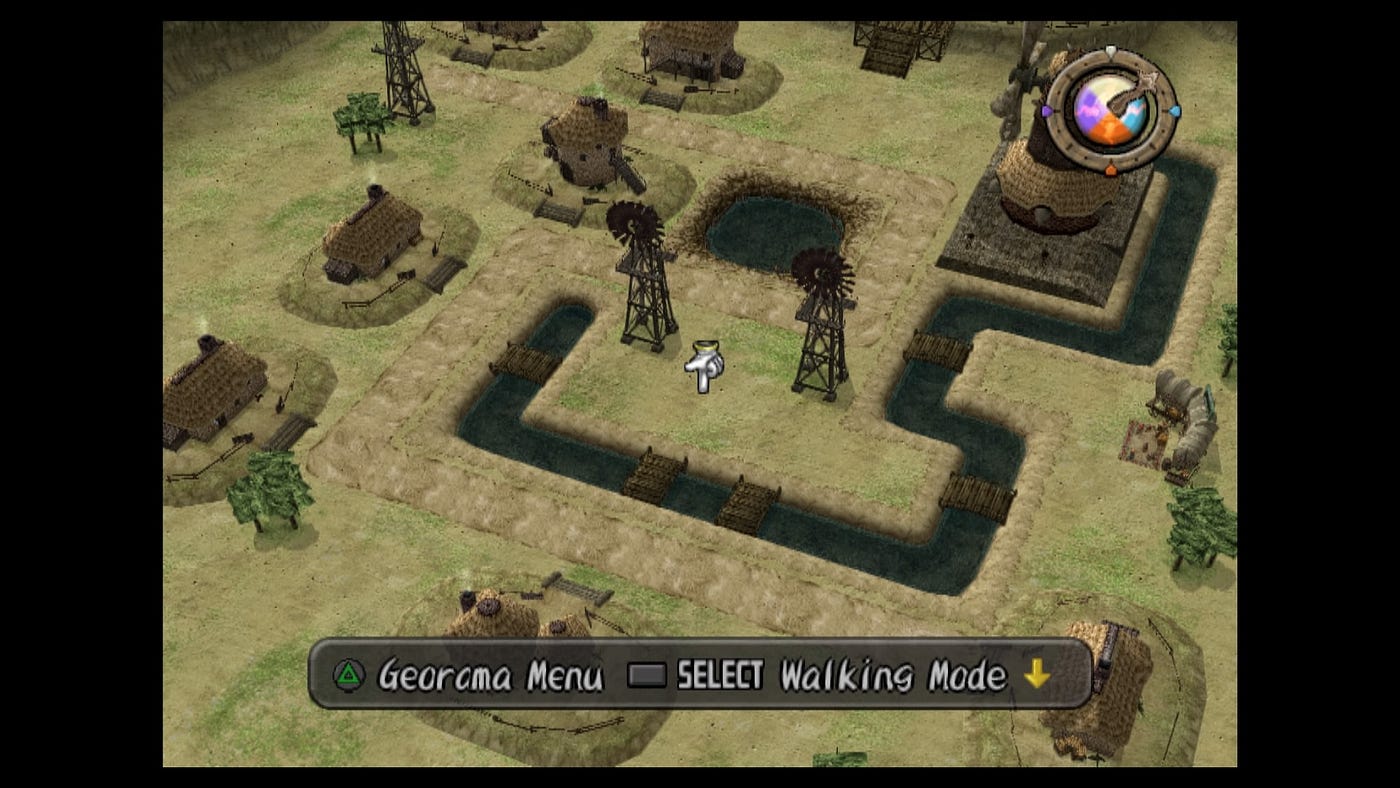
Dark Cloud is a bad game.

That said, the village reassembly system (aka Georama) - wherein you're allowed to organize the hub space in whichever way you want (to a certain extent) - was a cool idea, IMO.

1*HkSEwq_-z4MzW8pGfrVRqA.jpeg
 
I'll add one, but this game wasn't bad it just failed and died really fast, which makes this kind of a deep cut:

An MMO called Free Realms on the Playstation 3:

hqdefault.jpg


It has a mechanic that every multiplayer and single player RPG should have picked up. That mechanic is the fact that every single side activity you did in the game was a fun minigame.

It's hard to find footage of this game so I found what I could to present examples:

Cooking:


Mining:


Racing:


(I think this one was for armor or combat training):


There was one for farming too but I can't seem to find it.

Regardless, the idea seems clear with these videos. So in most games (especially ones where you craft stuff), I think it would be infinitely more fun to play a small minigame when you do things like chop trees or mine ore and going for high scores while doing that task would reward you with more xp, or more ore, or both.

Currently most games just have you select the item and either make you swing your axe/pickaxe at it manually by just clicking or it will play out an automatic animation while you sit there and wait for it to finish.

It always felt like game design that feels like a 'punishment' for having low-level mining gear, because you knew with higher level gear you could easily mine and chop faster.

So turning these mundane tasks into a fun puzzle minigames instead would actually make the process of gathering materials and crafting feel like more of an active experience rather than a grindy one.
 
Wo Long comes to mind as a more middling game that has the fantastic ability to parry just about everything that also looks and feels incredibly satisfying.
 
Bullet Witch is not a good game, but "gun-wielding witch with disaster magic" is an incredible pitch. The best part was the scale of the magic: summoning tornadoes, calling lightning, dropping massive supernatural attacks into a military shooter framework. It had that fantasy of being a battlefield witch instead of just another person with a rifle.
 
JAWS Unleashed has the most amazing controls and dismemberment mechanics ever.


Seriously, you can't understand how incredible it feels to control with analog sticks unless you try it. It completely ruined 2020 Maneater for me, utter trash in comparison.


Good call. This game rules.
 
Bodycount has a feature where you pull the trigger to lock your feet in place, then your movement stick controls your body position. You can use it to lean around corners, duck, dodge, etc. The game isn't very good, but that's an interesting feature that I haven't seen anywhere else.
 
NeverDead had a high-concept mechanic. You played an immortal character who did not just die when taking damage. Instead, he could lose limbs, get blown apart, roll around as just a head, and then recover his body parts or regenerate. On paper, that is brilliant. It turns failure into slapstick body-horror gameplay. You are not just managing health; you are managing your physical condition. The problem is the game made the mechanic annoying instead of empowering, but the idea itself is still one of the most unique action-game hooks of the 7th generation.
 
Not a bad game but action quake 2 had the bandage mechanic which is so much better than the regenerative health we ended up with.
 
01183EBA334220F79E17C2179ADAD51FDA8DBF78
LOTR - Shadow of Mordor.

Awful game carried by the brilliant nemesis system, which reminded me a lot of the system used in Cannon Fodder.
 
Elemental was a very janky and broken 4x game that was far more ambitious than it had any right to be. (Long story short, there is a remastered version that's much improved).

Anyway, one of the cool things it did was let you design every unit in your army. Think Civ but you can create custom versions of every unit, with different armor, weapons, perks, with more options as you unlock the tech tree.

Then each unit could level up, equip special gear you found, etc. There were also procedurally generated side quests and such. Basically what if fantasy Civilization and also it's an open world RPG-lite. Unfortunately it was also a buggy mess that barely worked. Lots of the concepts have shown up in the genre since then.
 
The alchemy system in Kingdom Come rocks.

Bodycount has a feature where you pull the trigger to lock your feet in place, then your movement stick controls your body position. You can use it to lean around corners, duck, dodge, etc. The game isn't very good, but that's an interesting feature that I haven't seen anywhere else.

Perfect Dark had that.
 
Last edited:
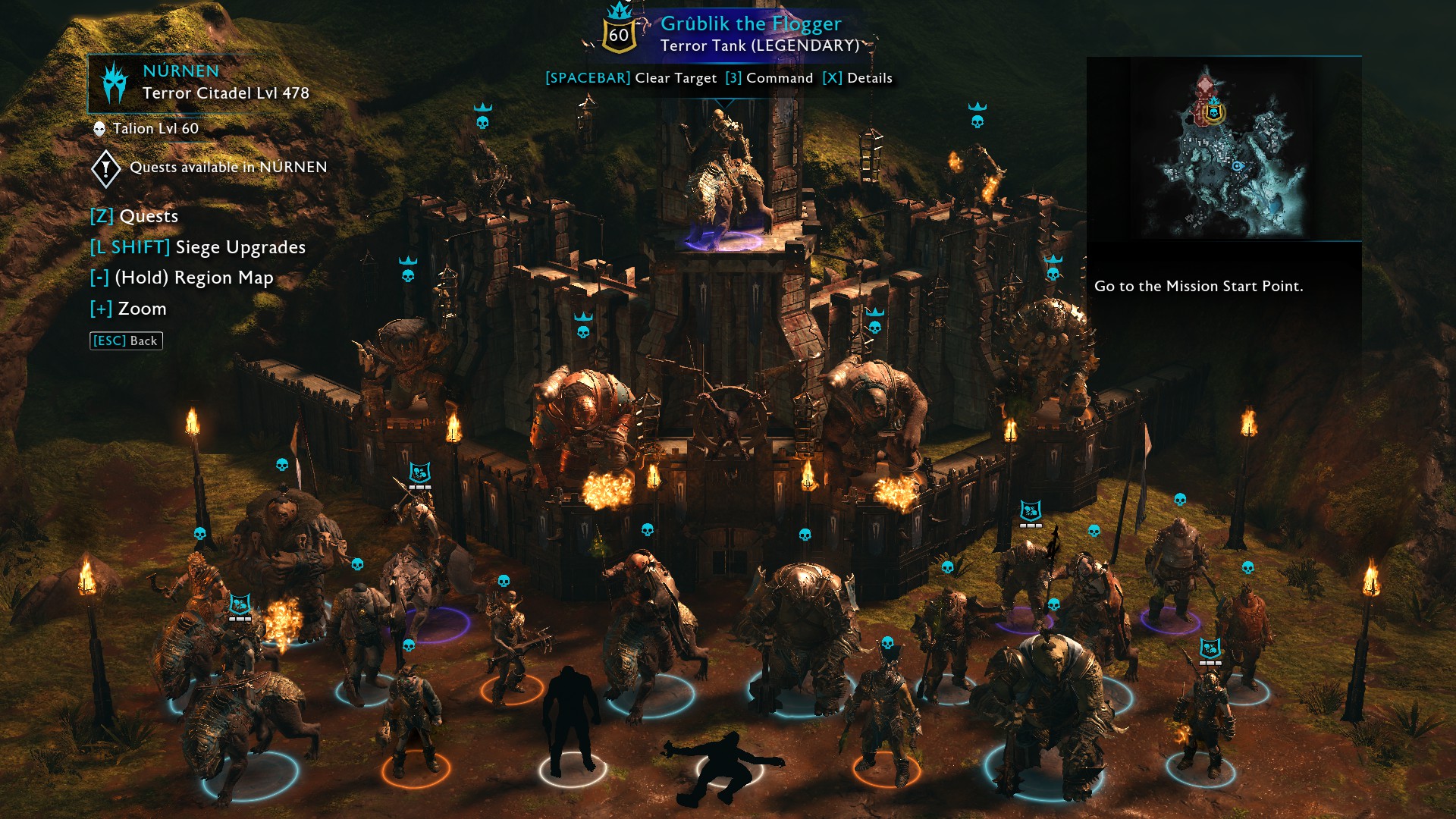
I only played like an hour of Shadow of Mordor, and thought it sucked, but what exactly is the nemesis system?
iirc you have to play for a lot longer than that to unlock it. Personally I liked those games, they weren't amazing or anything, but they were fun. So, you're taking out the orc leaders in Mordor, and they're a bunch of randomly generated characters with different strengths and weaknesses on that menu that you see up there, in a hierarchy. When you take out a leader, eventually someone replaces them from lower in the ranks, and if one of them ever kills you, they get stronger each time. Also they go around doing activities to make themselves stronger and sometimes attack each other.

The really fun part was that eventually you got to brainwash orc leaders, and you could set things up to move your orcs up the ranks, so that they'd be able to help you out in important situations and stuff.
 
Last edited:
Actually Dark Cloud is an amazing game and I would love a remaster.

That being said I wish more RPGs had a town building mechanic.
 
Bullet Witch is not a good game, but "gun-wielding witch with disaster magic" is an incredible pitch. The best part was the scale of the magic: summoning tornadoes, calling lightning, dropping massive supernatural attacks into a military shooter framework. It had that fantasy of being a battlefield witch instead of just another person with a rifle.
If only Japan had figured out shooters before then. Japan always came out of the nowhere with really cool shooter concepts... Bullet Witch, Vampire Rain, Dirge of Cerebus, Breakdown, Yakuza Dead Souls, GunGriffon, GunGrave, etc....

...but like 95% of them had a layer of jank that just couldn't get the gameplay right. Nearly every single time it was a controls issue but sometimes it was also a gameplay design issue as well.

Most people were just forgiving of most of their faults due to their creativity within the shooter genre.
 
Man, Minority Report on PS2/Gamecube/Xbox comes to mind. The game was NOT great, but it was such a guilty pleasure because of the physics. The ragdoll was over the top and there was a ton of environmental destruction. I had always hoped that we'd get better games like that in the future and we never did. I grew up absolutely loving beat 'em ups, so I thought there would always be a possibility. Especially after the Castle Crashers hype, but nope. I still really don't understand why.

I only played like an hour of Shadow of Mordor, and thought it sucked, but what exactly is the nemesis system?
Yeah, it wasn't for everyone, but man, I loved it, personally. The entire Shadow of Mordor game was much better than Shadow of War, but Shadow of War did have some improved/better mechanics. Both games were far from perfect, but the Nemesis System carried it so damn far because it was unique.

Basically there were boss enemies, and these enemies would take the roles of different ranks. These bosses all had different physical traits and personalities that made them stand out and more unique. Some had specific abilities, some specific strengths, weaknesses, etc. If you defeated them, they would remember you, and sometimes seek you out to get revenge, etc. You would capture territories and build your army and you could capture/hire those bosses to join your army. There's more details and more stuff here and there. But it just made for a neat and unique experience. The system alone made it stand out.

Then Warner Bros. patented the Nemesis System so that no other studio could use it or something remotely similar, which is absolutely stupid. I would've loved to have seen something like that for a Batman game or something. But I would've loved to see it more and more, as well as its evolutions.
 
Man, Minority Report on PS2/Gamecube/Xbox comes to mind. The game was NOT great, but it was such a guilty pleasure because of the physics. The ragdoll was over the top and there was a ton of environmental destruction. I had always hoped that we'd get better games like that in the future and we never did. I grew up absolutely loving beat 'em ups, so I thought there would always be a possibility. Especially after the Castle Crashers hype, but nope. I still really don't understand why.
This. My man.


"Great Mechanics Trapped In Flawed Games" Video Essay Summary


Core Thesis

The essay argues:
  • many "bad" or mediocre games contain:
    • incredible mechanics
    • brilliant systems
    • unique ideas
that were:
  • buried under:
    • rushed development
    • poor balancing
    • weak structure
    • trend chasing
    • technical limitations
Main argument:
  • game design conversations focus too heavily on:
    • successful games
  • while ignoring:
    • failed experiments
    • abandoned ideas
    • unrealized mechanical potential.

Bionic Commando (2009)

General Assessment

Described as:
  • the definition of a "360-ass game"
Criticized for:
  • incomprehensible story
  • repetitive combat
  • generic military-shooter aesthetic
  • middling encounter design

But The Grappling Hook Is Incredible

The video heavily praises:
  • Nathan Spencer's bionic arm mechanics
Key strengths:
  • momentum-based swinging
  • skill expression
  • movement flow
  • traversal versatility
Reviewer especially loves:
  • timing swings manually
  • chaining movement
  • physics-driven momentum

Combat Potential

Mechanics allow:
  • kicking enemies mid-swing
  • grabbing objects/enemies
  • throwing vehicles and debris
Reviewer says:
  • brief moments reveal:
    • "what Bionic Commando could have been"

Main Problem

The wider game:
  • never evolves the mechanic properly
Issues:
  • linear level design
  • invisible radiation boundaries
  • repetitive enemy encounters
  • lack of enemy variety
  • shallow progression

Core Design Critique

The reviewer argues:
  • throwing mechanics should have existed from the start
  • and expanded throughout game
Instead:
  • game introduces best combat mechanic halfway through
  • then barely builds upon it.

Fracture


Core Mechanic

Third-person shooter featuring:
  • terrain manipulation gun
Allows player to:
  • raise/lower terrain dynamically

Why It's Interesting

Creates:
  • dynamic cover systems
  • battlefield control
  • sightline manipulation
  • environmental tactics
Reviewer praises moments where:
  • reshaping terrain changes combat flow in real time.

Why It Fails

Problems include:
  • chaotic combat readability
  • weak gunplay
  • poor driving sections
  • repetitive bosses
  • screen shake overload
Result:
  • brilliant terrain system buried inside mediocre shooter structure.

Quest 64


Initial Criticism

Reviewer calls it:
  • one of the first games they ever disliked
Complaints:
  • empty world
  • awful camera
  • vague systems
  • weak writing
  • terrible pacing

But Combat Is Fascinating

The battle system:
  • occurs directly in overworld
  • uses:
    • positioning
    • terrain
    • spell trajectory
    • movement

Interesting Mechanics

Features:
  • dodgeable attacks
  • spatial spellcasting
  • tactical movement
  • varied elemental magic
Reviewer especially praises:
  • lack of explicit AoE indicators
because:
  • player learns spell behavior intuitively through experience.

Strategic Twist

Turn economy works differently:
  • enemy count affects action flow uniquely
Meaning:
  • killing weaker enemies first
  • is not always optimal strategy
Reviewer says:
  • combat feels unlike most JRPGs.

Shadwen


Core Idea

Stealth game attempting to solve:
  • frustrations common in stealth genre
Especially:
  • save scumming
  • punishment-heavy morality systems

Main Mechanics

Combines:
  • SUPERHOT-style time movement
  • Prince of Persia-style rewinds
Meaning:
  • time moves mostly when player moves
  • mistakes can be rewound freely

Why It's Interesting

Reviewer says:
  • mechanics encourage:
    • experimentation
    • tactical thinking
    • less frustration

Most Interesting System

Companion character:
  • Lily
Player can kill guards:
  • BUT:
    • Lily seeing corpses traumatizes her
Result:
  • bodies must be hidden:
    • not just from enemies
    • but from child companion
Reviewer calls this:
  • a genuinely brilliant moral-mechanical integration.

Why It Falls Apart

Problems:
  • terrible AI
  • janky stealth systems
  • unreliable encounters
  • weak encounter complexity
Result:
  • mechanics mostly compensate for broken AI
  • instead of enabling advanced stealth design.

Red Steel


General Assessment

Early Wii FPS with:
  • ambitious motion-control systems
Features:
  • gesture reloads
  • directional aiming
  • sword fighting
  • enemy disarming

Main Issue

Wii hardware precision:
  • simply wasn't ready yet
Result:
  • clunky gameplay
  • unreliable controls

But Multiplayer "Killer Mode" Was Amazing

Reviewer's favorite mechanic:
  • Wiimote phone-call system
Players receive:
  • secret assassination objectives
  • through speaker on Wiimote

Why It Worked

Created:
  • paranoia
  • social tension
  • mind games
  • couch multiplayer chaos
Reviewer says:
  • nothing else felt quite like it.

Geist


Core Mechanic

FPS where players:
  • possess objects and humans

Multiplayer Potential

"Hunt Mode":
  • ghosts possess humans
  • humans fight back physically against possession
Creates:
  • asymmetrical mind games
  • couch multiplayer chaos
Reviewer says:
  • multiplayer realized mechanic's potential better than single-player did.

Anthem


Key Point

Reviewer never played Anthem.

But:
  • now regrets never experiencing:
    • its flying mechanics
before servers shut down.


Main Preservation Argument

Because Anthem was:
  • online-only
its:
  • mechanics
  • feel
  • systems
are now effectively lost.


Important Point

The reviewer argues:
  • preserving games matters not only for consumers
  • but for:
    • future developers
    • mechanical study
    • inspiration
because:
  • failed games often contain ideas worth revisiting.

Broader Industry Critique

The essay criticizes:
  • modern AAA homogenization
Examples:
  • Dark Souls influence
  • Breath of the Wild influence
  • Balatro influence

Main Concern

Successful mechanics get:
  • copied endlessly
while:
  • unusual failed experiments disappear
Reviewer believes:
  • innovation often exists in flawed games
  • not just successful ones.

Key Philosophical Argument

One of the essay's strongest lines:
  • "the opposite of good is uninteresting."
Meaning:
  • flawed games can still matter deeply
  • if their mechanics remain:
    • unique
    • ambitious
    • memorable

Final Message

The essay ultimately argues:
  • gaming history should preserve:
    • weird games
    • failed experiments
    • abandoned systems
    • ambitious mistakes
because:
  • many contain untapped ideas
  • waiting for future developers
  • to refine into something great.

Someone needs to tell the AI what "summary" means.
 
NeverDead had a high-concept mechanic. You played an immortal character who did not just die when taking damage. Instead, he could lose limbs, get blown apart, roll around as just a head, and then recover his body parts or regenerate. On paper, that is brilliant. It turns failure into slapstick body-horror gameplay. You are not just managing health; you are managing your physical condition. The problem is the game made the mechanic annoying instead of empowering, but the idea itself is still one of the most unique action-game hooks of the 7th generation.
Angry Vin Diesel GIF by Fast & Furious


Don't you dare talk smack about NeverDead. The gameplay is momentum based and works as intended. Its empowering once you actually get a hang of it. The problem is the game didn't do the best job of communicating this well to the player. The designer assumed most would have the persistence to figure it out on their own. Regenerating your health on the spot, when the "eye" meter was full, was designed to skip the "annoyance" of picking up all your body parts one at a time. Alternatively, you body parts could be used as cluster bombs, if you had bought the skill for it. Stripping yourself of body parts, and using them in creative ways, is the core of the action.

All I'm reading is a skill issue.
 
Last edited:
Top Bottom