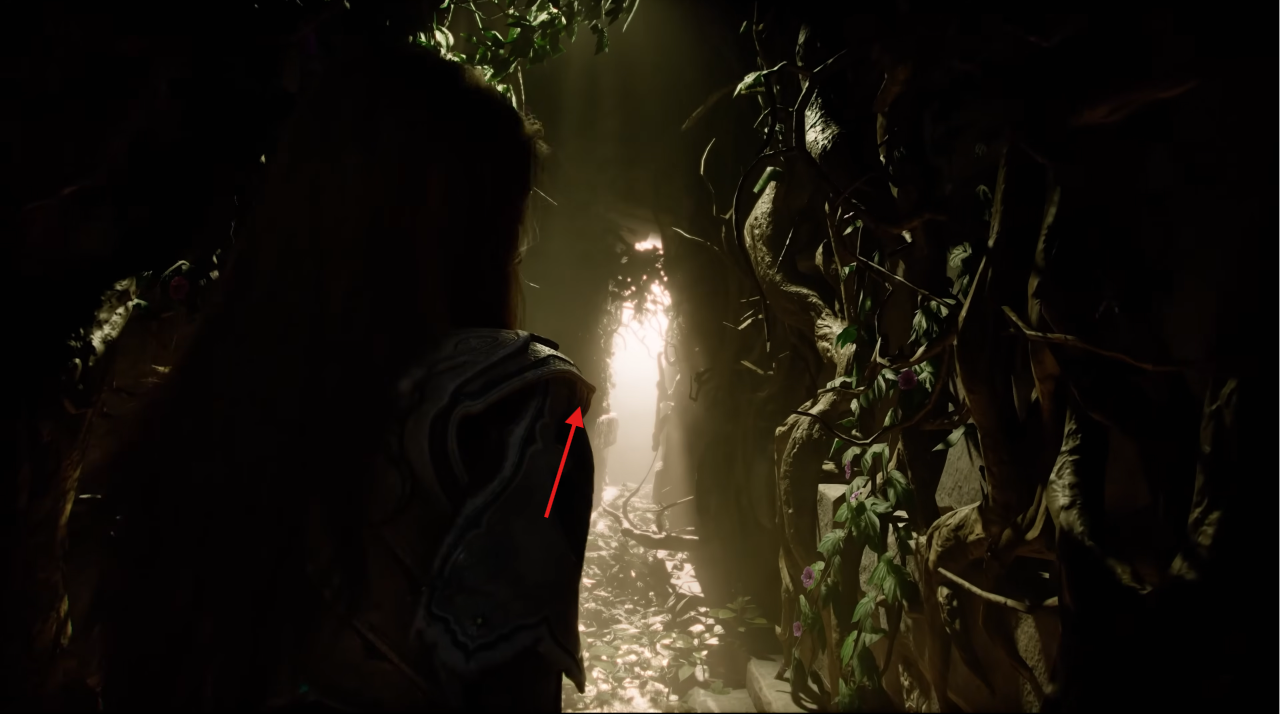
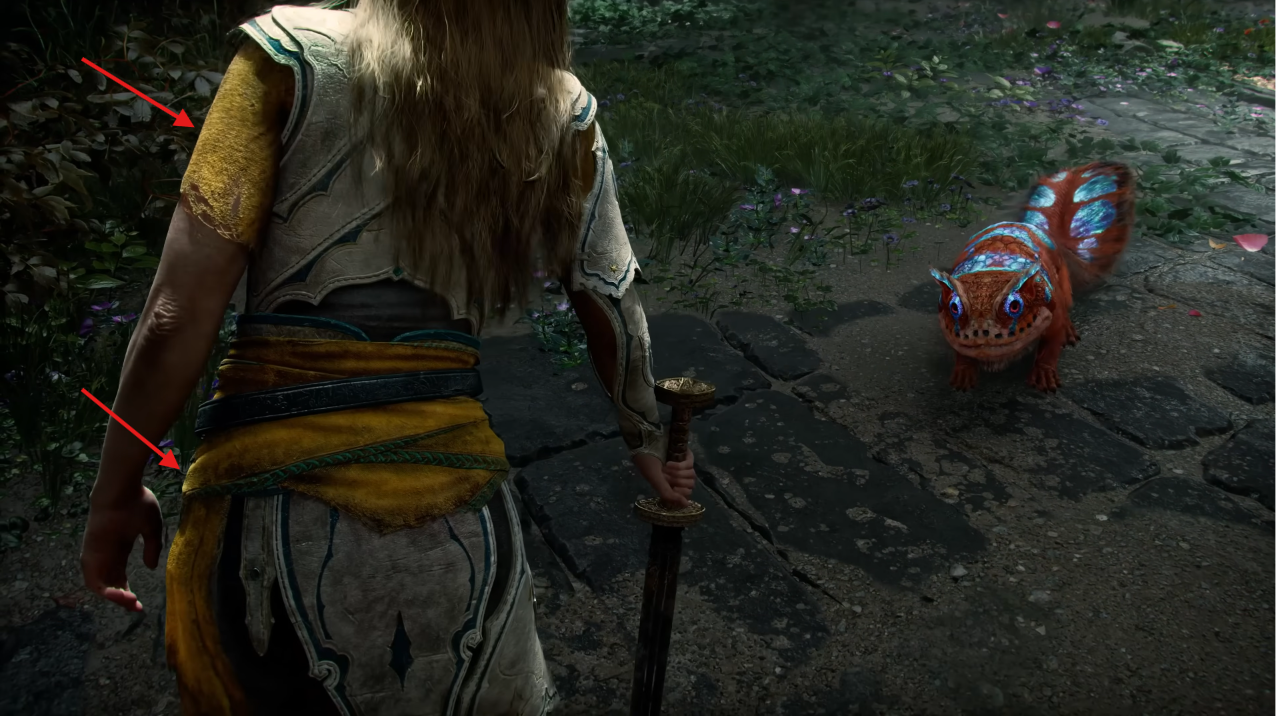
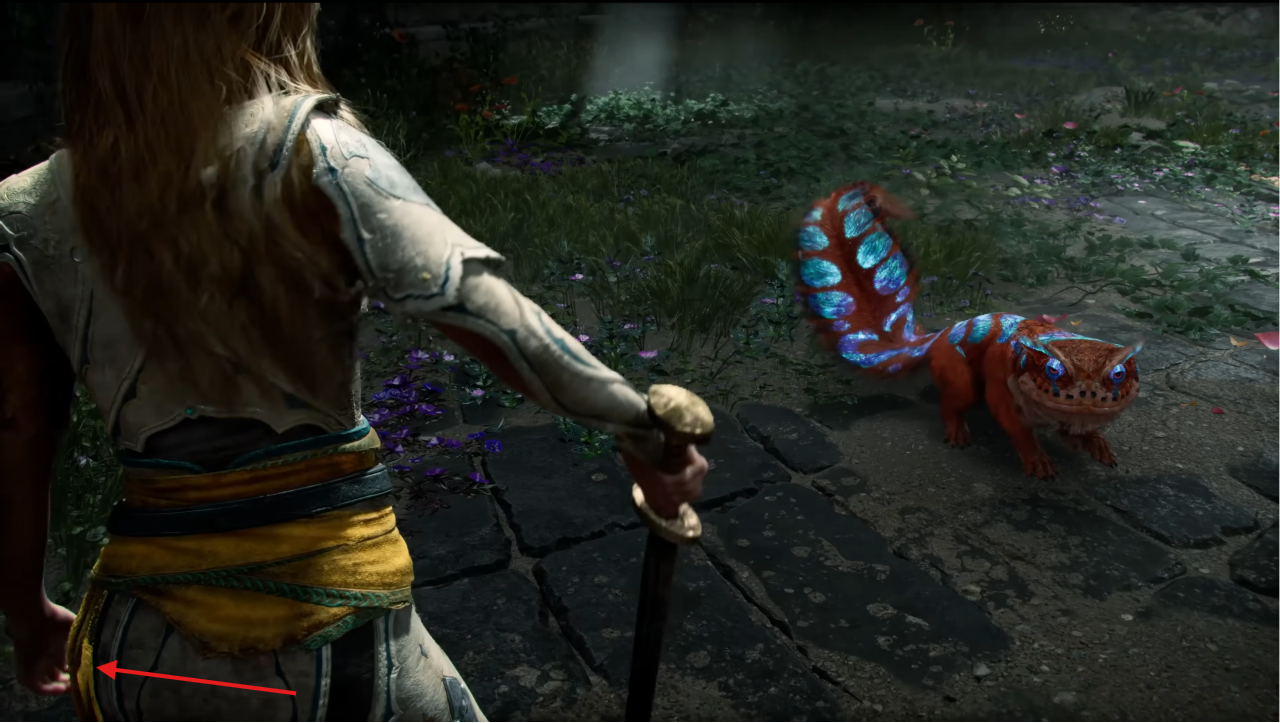
Hehe. I believe it is on leather too for Ragnarok, but I couldn't find an extreme example to prove it. Here's one in Laufey. Notice how you can see the
underside of the leather towards the edge, the moment light hits the top. The rest is in shadow, so that's neither direct light nor indirect light underneath. It's SSS from direct light hitting the top side.
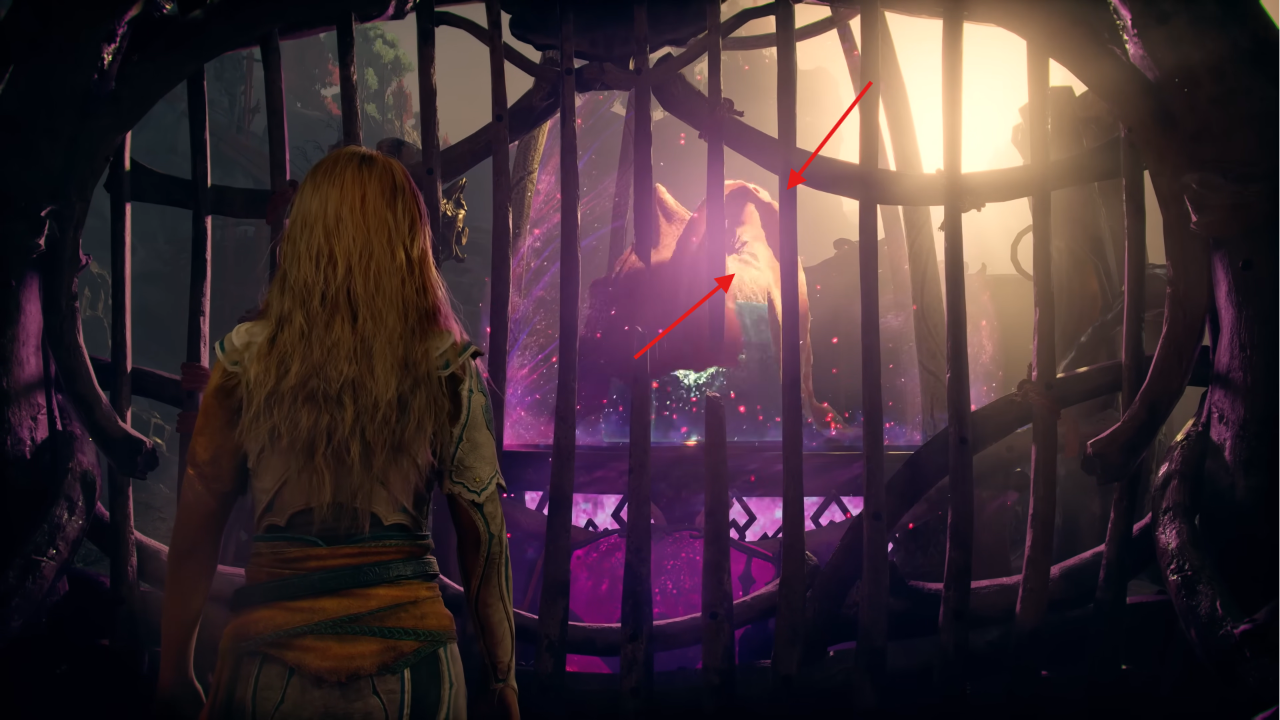
And hair/fur:
And pretty sure cloth didn't have it in Ragnarok. Cloth response always seemed very flat in that game regardless of light conditions. Just a lot of heavy texture work (AI upscaled for PS5 on top of that), but no actual reactivity to light. It seems to be on most cloth now:
It shines right through to the inside in the next few frames:
And here as well:
It all changes in real time in line with their brand new cloth physics too:
I'm seeing this on all wood too. And may be even bones (not sure yet). Wood has atrocious light response in Ragnarok, so that's a solid upgrade.
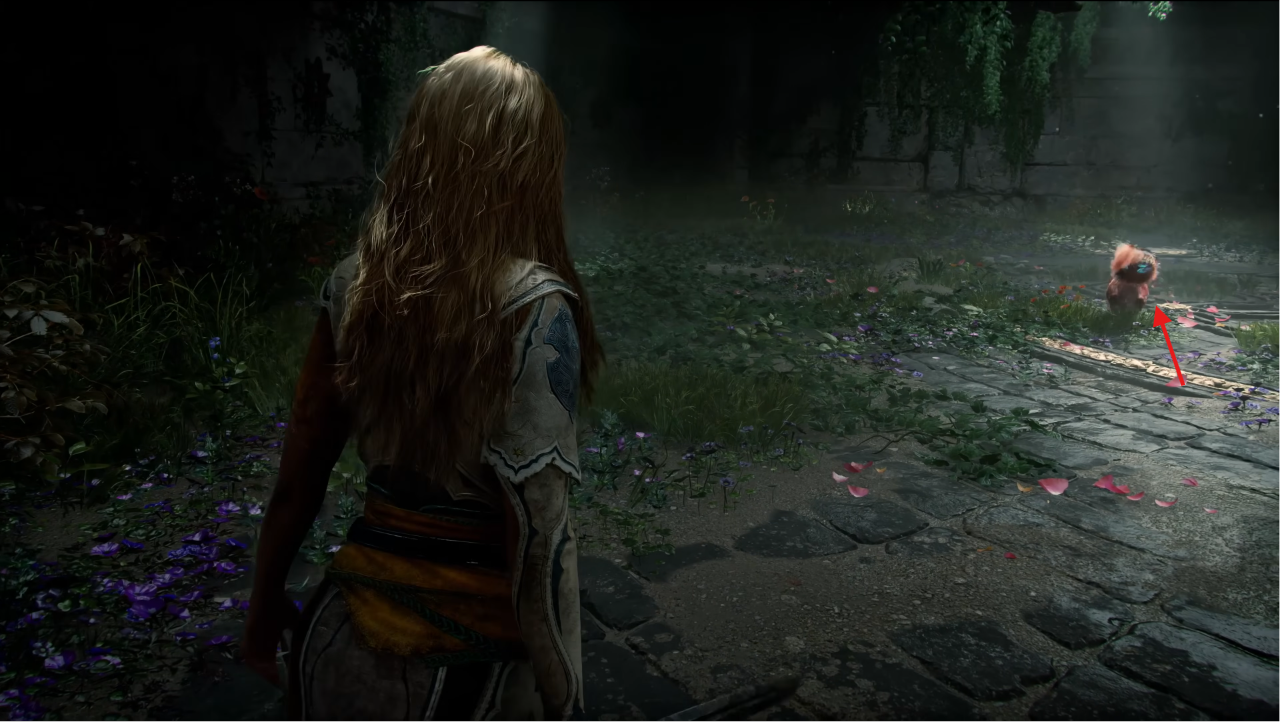
And on RTGI, it seems they are doing RTGI specular as well. Not just diffuse. Any light hitting metal on the ground precisely changes lighting on one side of her armor. It changes based on how much direct light is hitting the metal too, if any. Only the first 2 frames even get any direct light on the ground, so how they are pulling this off with a single bounce for the remaining frames is beyond me. And if it hits rock, you can see how that affects lighting on the same part of her leg
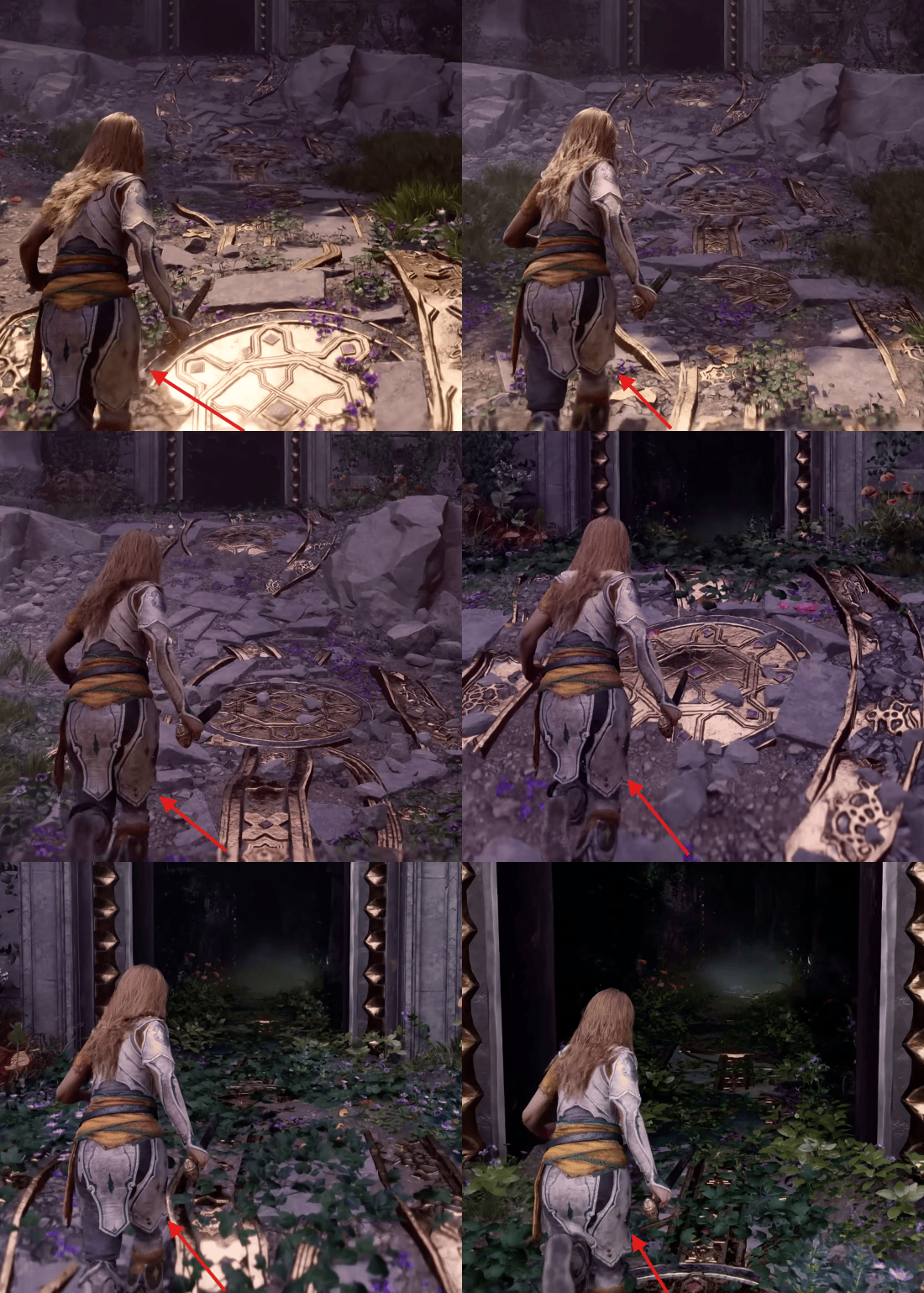
Also did a quick capture of how the environment affects the character's indirect lighting as a whole when she moves around. You can see the armor's hues matching the environment, starting with purple and ending with more greens. Again, you can see how any spot where she is above metal, the armor lights up a lot more. That's specular GI and the rest is diffuse GI. Unless they doctored the entire trailer and baked her GI every couple of feet before rendering out frames, this is not possible in real time rendering. It
has to be ray traced. I'm not convinced this is multibounce yet, so I'm still sticking to the guess of a probe-based system simulating multibounce for the "macro" detail and per-pixel RT to those probes for micro detail.