Buggy Loop
Member
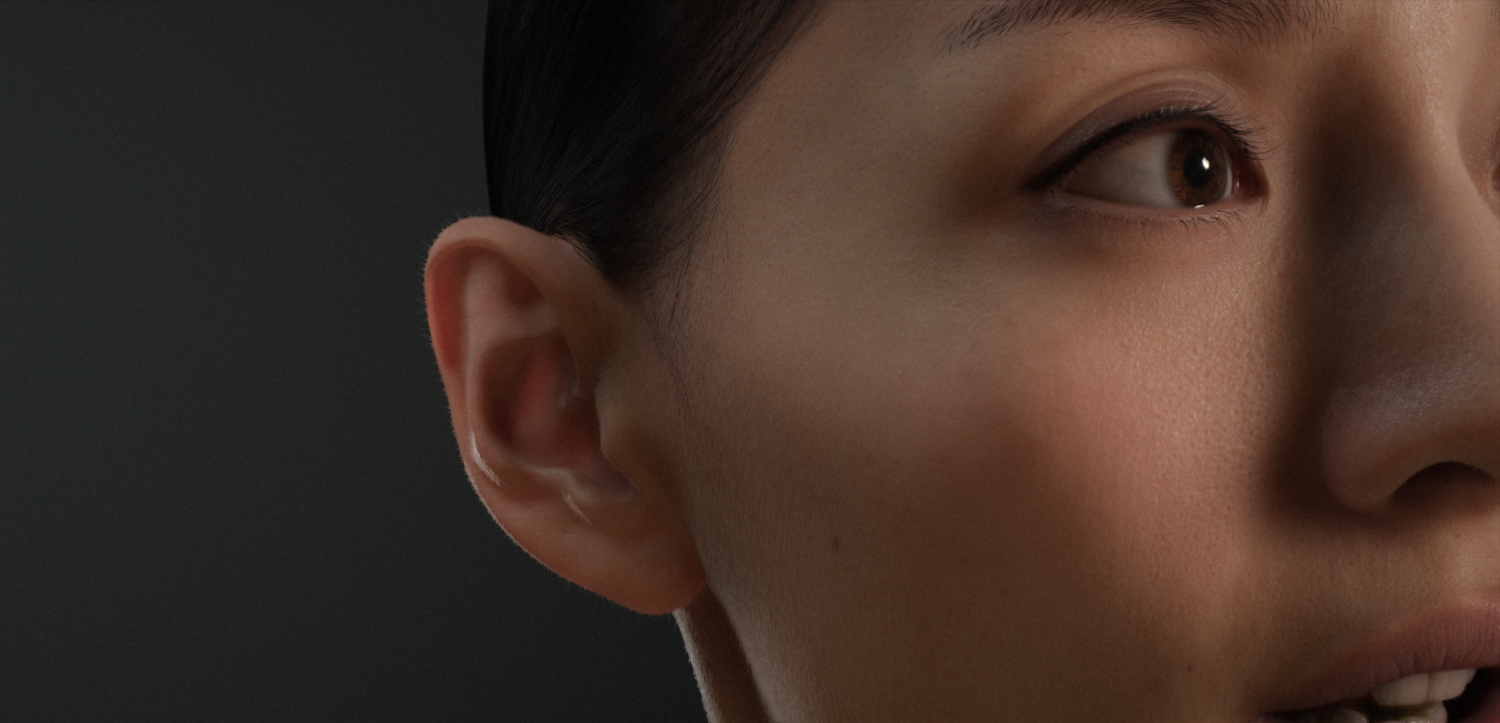
Because reconstructing the output of a physically based calculation is "basically the same" as predicting how something should look based on a collection of hints and a very confident neural network.

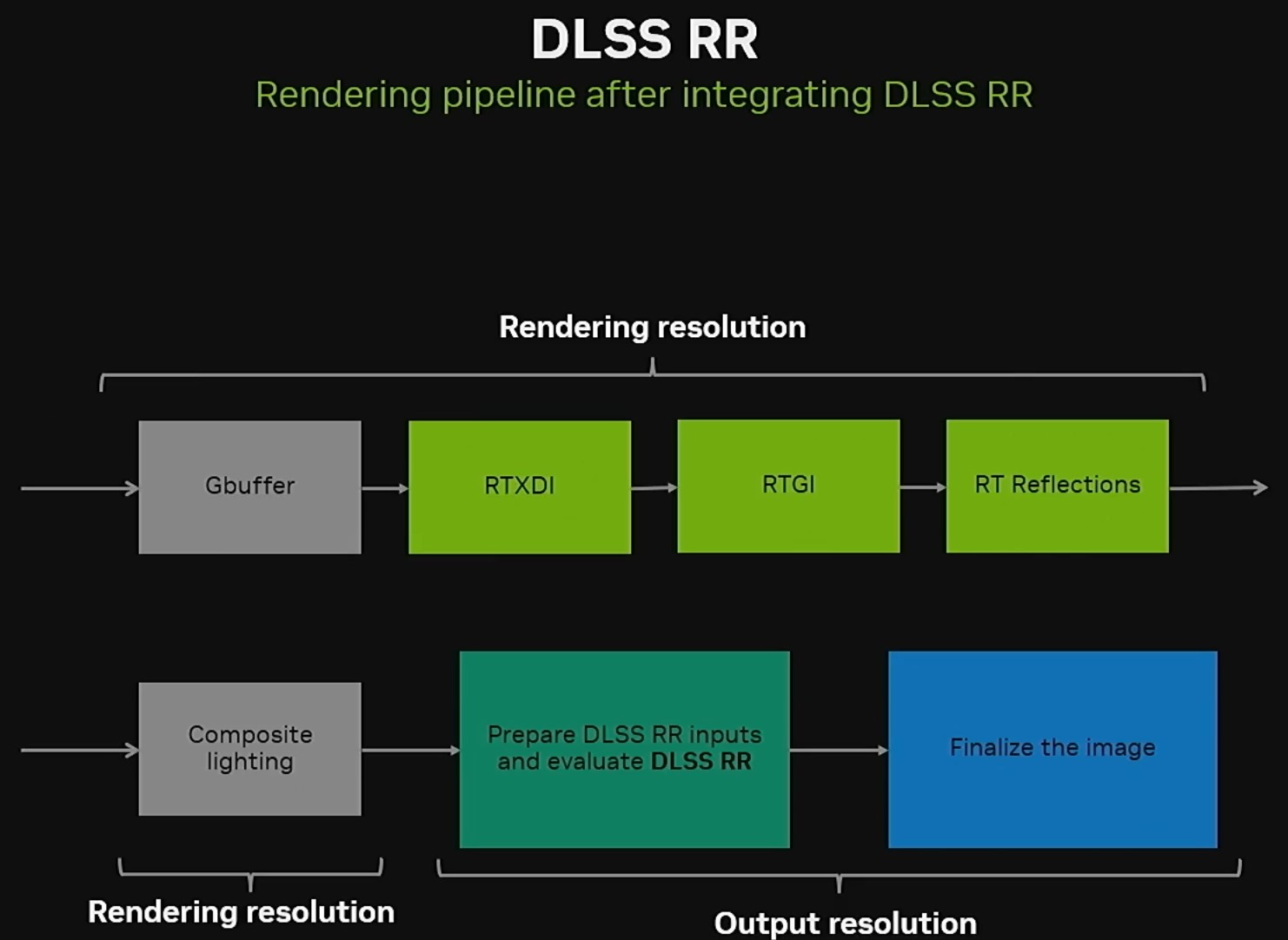
Ray Reconstruction starts with an actual lighting simulation, meanwhile DLSS 5 predicts a plausible result learned from training data,
Ray reconstruction uses generative AI to know how it should look. It recognizes patterns for effects like global illumination, reflections, and ambient occlusion.
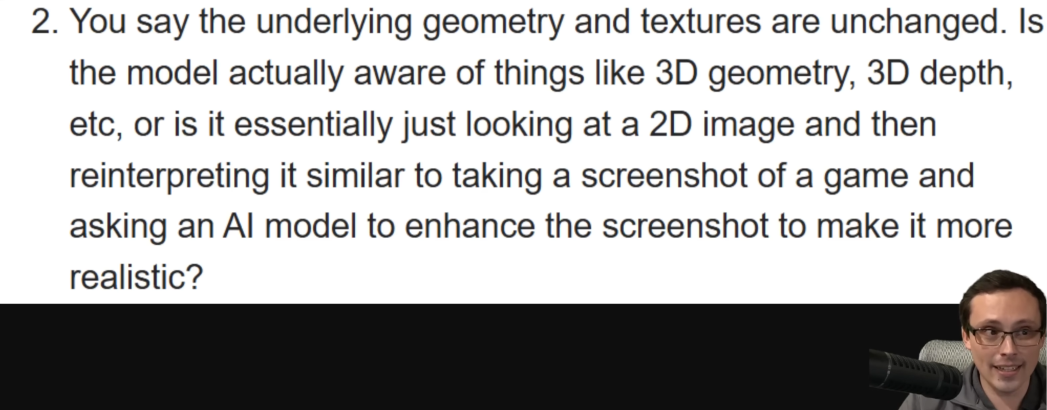
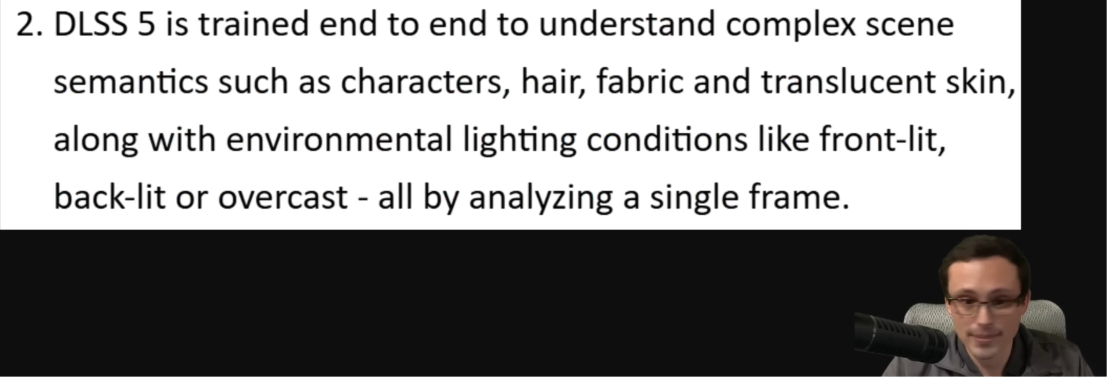
DLSS 5 has access to the exact same information and can use generative AI to know how it should look. It's exactly at the same place in the pipeline.
rather than solving the physical process that produced the result.
It is working with the produced result from all the pipeline as RR does, what you think its doing? Re-doing the whole frame?
Which it couldn`t because it does have, at best, incomplete knowledge about the actual physical situation and the light stransport, even with the G buffer.
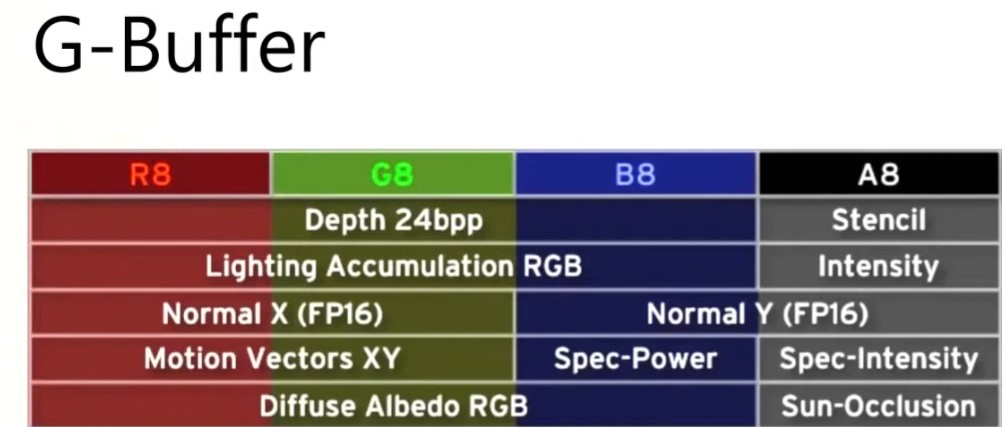
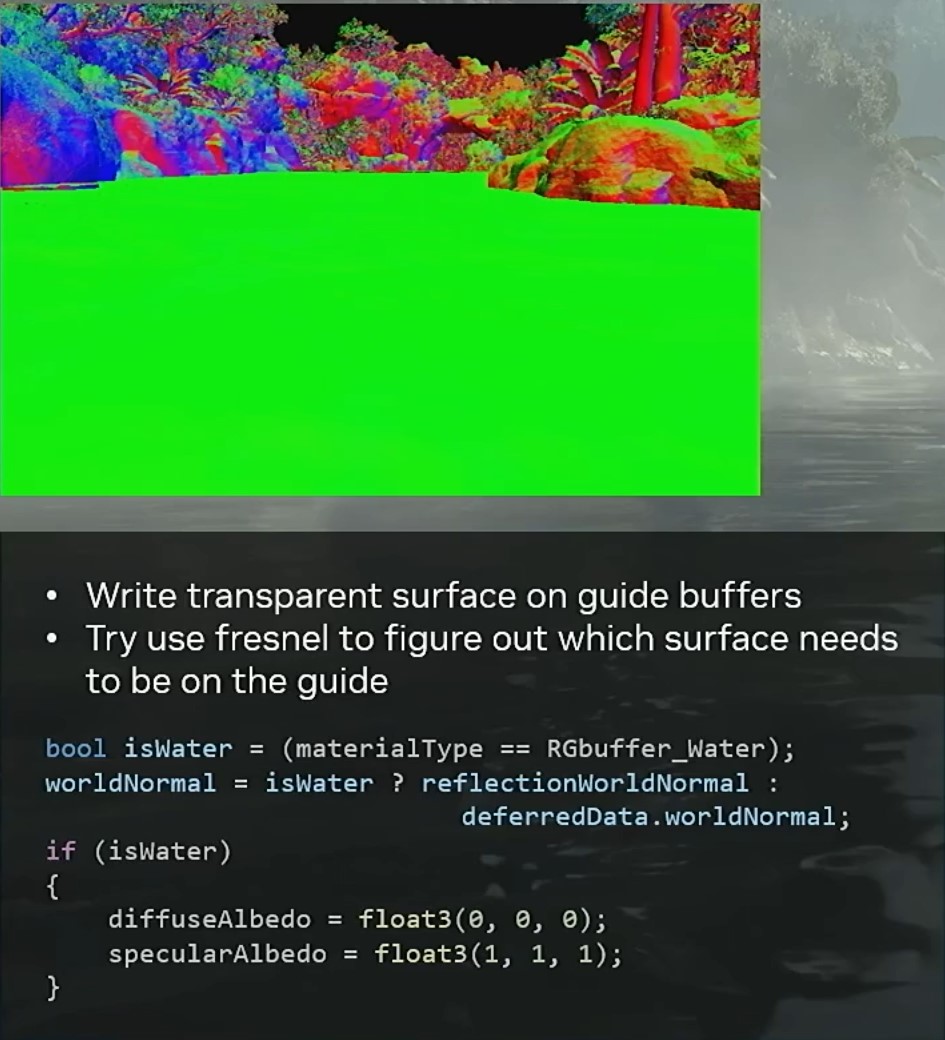
Repeat after me : The exact same inputs as ray reconstruction. RR uses the light accumulation sampling (in G-buffer, or other buffers for multi-light bounce but regardless, in screen space)
The comparison with a deferred renderer is equally ridiculous because a deferred renderer does not just say "this pixel looks like skin, therefore add skin lighting."
Uh yea? As with anything that is not baked and most of the pipeline beyond the first rasterized games, there's algorithms exactly for that. How do you think fragment shading works for almost all detailed effects that makes games look like they do nowadays? Ambient occlusion, again, how do you think that happens? An algorithm looks at the scene does depth sampling from G-buffer data and looks for pixels around it to determine the shape, will say oh here's a tight corner or an object touching another surface with different normals, well let's apply shadow creases. It's not an "artist".
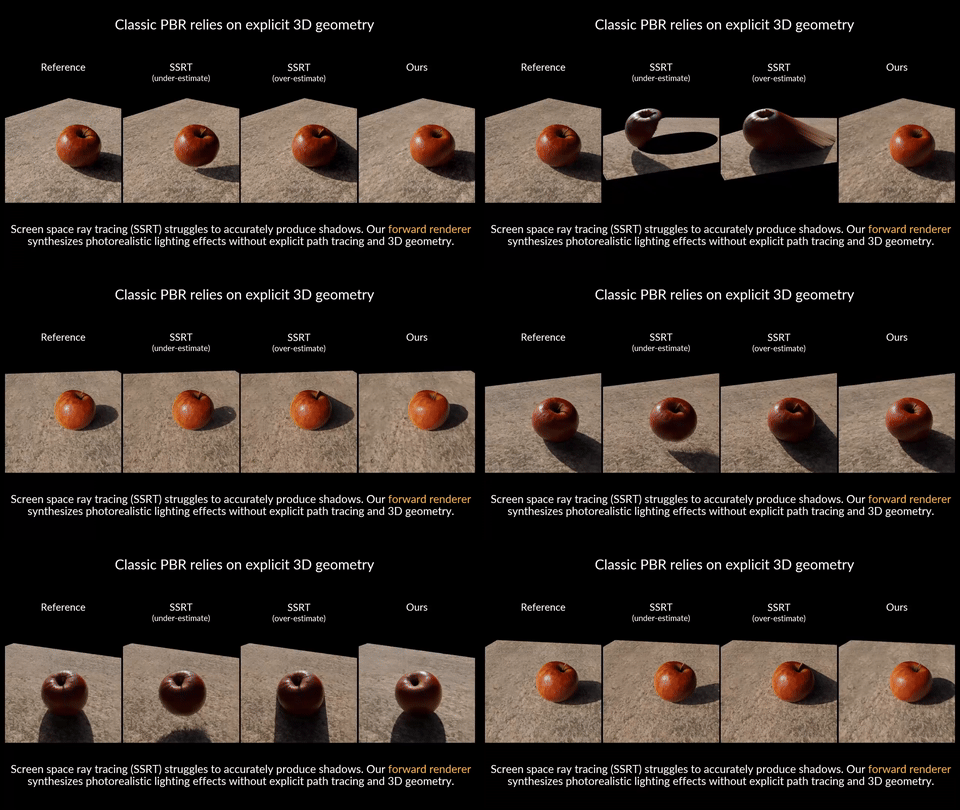
Subsurface scattering from Nvidia/Epic/Unity has been screen space forever, the alternative is too costly in performances for little to no gains.
Here have fun, even a browser version
Der Schmale - Subsurface Scattering for Skin Rendering
Screen-space Subsurface Scattering for Skin Rendering
www.derschmale.com
You talk like games are pixel arts and that DLSS is gonna "guess" something, when the entirety of the pipeline has been "engineered" to cheat their way to the solution since the dawn of graphic rendering. A man-made algorithm probing slowly a scene taking many many iterations to fumble in the dark and detect the scene shapes, then algorithm says yes, right there, you detected a tight corner, apply shadowing... or an AI looking at the scene and understanding that there's walls there touching, should have a shadow, what's the problem here? Games are not pixel art. Neither cases an artist placed the shadowing.
Is your whole argument based on "math" good and AI bad? Because then the whole DLSS suite basically gets wiped. Remove AI upscaling too, goddamn, it knows how to fix images rather than use algorithms like TAA. Ray reconstruction would fall back to traditional denoising filters. Neural cache radiance PT too, nuh uh! Go back to Monte Carlo!
All your sermons literally just boil down to...."i´m sure Nvidia`s model will hallucinate correctly"
My sermons? Dude you went into all DLSS 5 threads to say it's an instagram filter as if its post processing effect and that there's an issue because its screen space. Probably because screen space = screen space reflections = bad right? Almost the entirety of a frame's rendering time is in screen space among oh so many effects.
Hallucinate?
Trusting one of the most prominent research scientist in the field that participated in almost all the latest nvidia technologies of the past years, such as ReSTIR GI, and is now director of applied deep learning research
Or Cumulus "screen space is an issue"

Last edited:













 )
)