MrCunningham
Member
EA's partnership with Sega was a big thing. Trip Hawkins had an axe to grind with Nintendo,
It was more complicated than just having an 'axe to grind'. It had a lot to do with Nintendo's lucrative third party contracts that prevented publishers from publishing games for competing contracts. The few EA games that did end up on the NES were published by Ultra Games, a division of Konami.
Trip said that he didn't like the aging NES 8-bit hardware by 1989. he was much more interested in the Sega Genesis with its 16-bit Motorola 68000, which was a lot like the 68000's seen in the Amiga and Atari ST. EA was primarily a publisher on the micro computers and DOS before they got into the home console market.
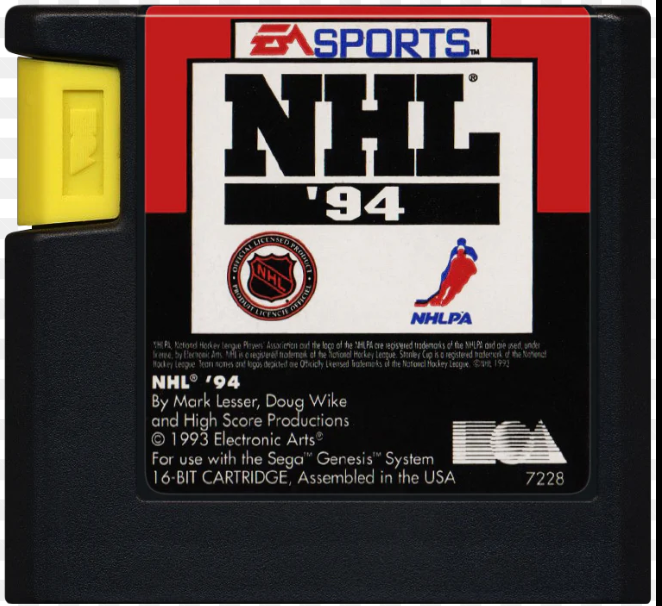
Of course he threatened the people at Sega of America that he would flood the Genesis market with waves of unlicensed EA games if they didn't give EA favorable royalties. Which meant that EA was also getting a larger cut of the profits for every EA cart sole on the Genesis/ MD in comparison to Nintendo's 30% cut. EA was allowed to manufacture their own taller yellow tabbed carts , which also saved on manufacturing costs too.
Nintendo had to change their contracts with the SNES to allow publishers to make multi-platform games. At this point EA became a publisher. But they still favored the Genesis over the SNES. EA published over 120+ games on the Genesis/ MD overall.
That's not true at all. Every EA sports game on the Genesis runs at a higher resolution than their SNES games. The typical Genesis game has a resolution of 320x224, while the typical SNES game displays at 256x224. There are very few cases where a Genesis game runs at 256x224. The only real upsides to the SNES versions were the higher colour pallets and sometimes the PCM audio channels that allowed for clearer voice samples., but the Genesis version was invariably better in everything except resolution and color palette, every single time.
EA really struggled with their earlier SNES ports of Madden, NHL and the NBA games... as they did suffer from slow down, limited field of view (lower resolution on the SNES). The SNES versions would honestly lack digitized voices, manly because the SNES cart had to use the extra space to store audio fonts for the music, while the Genesis game used FM Synth via EA's custom audio driver. The SNES ports would also lack various player tracking features and other modes from the SNES games, making them generally inferior. EA really didn't get their shit together with the SNES ports util much later in the consoles life cycle.
The SNES was simply never the preferred system for devs of sports and racing games, and this absolutely influenced the fate of Nintendo systems down the line.
Sega always had the monopoly on sports games during the 16bit era. Everything from Tommy Lasorda baseball, Joe Montana, The EA games and Sega's own World Series Baseball franchise. World Series Baseball became the definitive 16bit baseball game series.
The Super Nintendo also had good sports games as well... but most were less sim-like and more arcade-y (oddly enough). Konami did make some good Soccer games for the system. I would say the Genesis dominated the sales charts in sports games between 1990 to 1994 or 1995...I don't believe there was ever a time when Nintendo's SNES beat out the Genesis in sports games sales in any consecutive year (but I could be proven wrong).
By the time the Playstation ad Saturn came out, there was a huge shift over to those systems for the major sports franchises. The N64 didn't do too bad, with its four control ports and fast loading games.